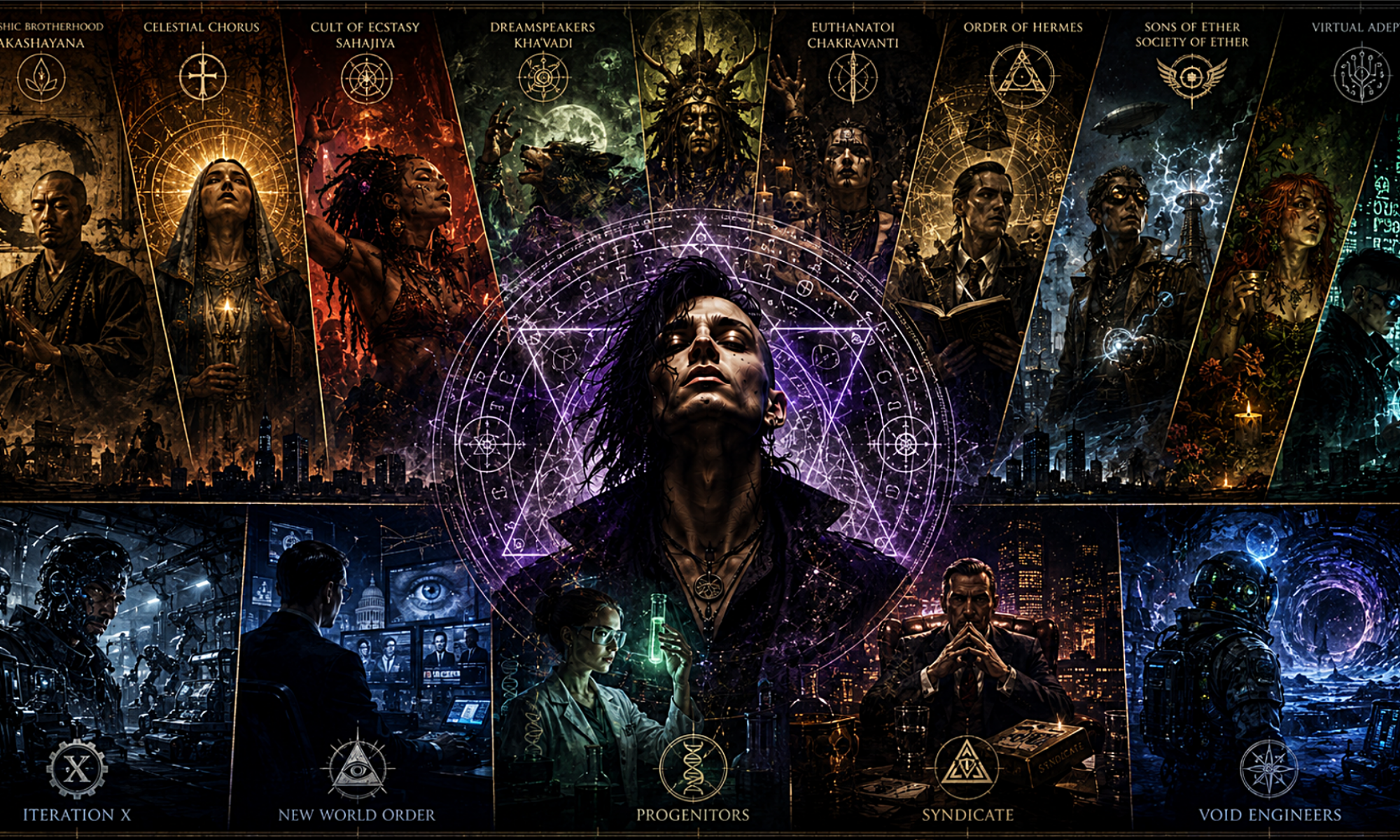


Session Zero Tools for Mage: The Ascension
Before the first die roll, get everyone aligned.
That sounds simple.
It is not.
Mage: The Ascension can be street-level occult mystery, cosmic horror, philosophical conspiracy, urban fantasy, Technocracy espionage, punk rebellion, spiritual awakening, or a room full of people arguing about whether reality is a prison, a dream, a machine, or a bad habit.
All of those are valid. Not all of them belong in the same chronicle. That is why Session Zero matters.
A good Session Zero does not kill mystery. It gives the mystery somewhere to grow.
What Is Session Zero?
Session Zero is the conversation before the campaign begins.
It is where players and Storytellers agree on what kind of game they are playing, what kind of experience they want, and what everyone needs to have fun.
For Mage , this is especially important because the game is big.
Very big.
Mage can handle almost anything. That does not mean your chronicle should include everything. Session Zero helps you decide what this version of Mage is going to be.
Start With the Big Question
Before character sheets, before Spheres, before factions, ask: What kind of Mage game are we actually playing?
Some possible answers:
- Newly Awakened mages discovering the hidden world
- Street-level occult investigation
- Chantry politics and Tradition drama
- Technocracy agents trying to protect the world
- A mixed cabal caught between factions
- Umbra exploration and spirit weirdness
- Nephandi horror
- Cyberpunk reality hacking
- Magical academia
- Punk rebellion against Consensus
- Personal drama about belief, trauma, and transformation
- Gonzo metaphysical chaos
None of these are wrong. But the table should know which game it is choosing.
Define the Tone
Tone is the emotional contract of the chronicle. Ask your table what the game should feel like.
Should it be:
- Dangerous?
- Funny?
- Tragic?
- Weird?
- Romantic?
- Political?
- Investigative?
- Philosophical?
- Hopeful?
- Bleak?
- Personal?
- Epic?
Mage often works best when you choose a few dominant tones rather than trying to do everything at once.
For example:
Urban occult mystery with moments of absurd cosmic horror is much clearer than everything from the Mage books.
A clear tone helps players build better characters. It also helps the Storyteller know what kind of scenes belong.
Set the Scale
Mage changes dramatically depending on scale.
A street-level chronicle about one haunted neighborhood is different from a cosmic chronicle about rewriting the rules of reality. Both can be excellent.
Ask:
- Are we protecting one neighborhood, one city, the world, or reality itself?
- Are the characters newly Awakened, experienced mages, or powerful Masters?
- Are the threats local, factional, spiritual, cosmic, or personal?
- Will the story mostly happen in the mundane world, the Umbra, Horizon Realms, or all of the above?
A smaller scale is often easier for new groups. A bigger scale can work beautifully once everyone knows what kind of Mage they want.
Talk About Safety and Boundaries
Mage can touch intense material.
For example:
- Religion.
- Trauma
- Mental health
- Cults
- Conspiracy
- Body horror
- Abuse of power
- Apocalypse
- Possession
- Institutional control
- Spiritual crisis
That does not mean every table wants every subject.
Use Session Zero to discuss:
- Lines: material that should not appear
- Veils: material that can exist but should happen off-screen
- Topics that need extra care
- How players can pause or redirect a scene
- Whether horror should be psychological, occult, cosmic, political, physical, or minimal
Safety tools do not weaken horror. They make trust possible. And trust lets players go deeper.
Establish Player Expectations
Mage can create very different expectations at the table.
Some players want philosophical arguments. Some want action. Some want investigation. Some want magical problem-solving. Some want character drama. Some want faction politics. Some want to bend reality until it screams.
Ask each player:
- What do you want more of?
- What do you want less of?
- What kind of scenes excite you?
- What kind of scenes bore you?
- Do you like puzzles?
- Do you like combat?
- Do you like political negotiation?
- Do you like moral dilemmas?
- Do you want your character’s beliefs challenged?
You are not trying to satisfy everyone in every session.
You are trying to understand what everyone came to play.
Build Character Connections Early
Mage works best when the cabal has reasons to care about each other. Do not wait for that to happen accidentally.
During Session Zero, ask:
- How did the cabal meet?
- Who trusts whom?
- Who has history?
- Who owes someone a favor?
- Who disagrees about magic?
- Who shares a mentor?
- Who saw something together they cannot explain?
- Who is hiding something from the rest of the cabal?
- Why do these people keep working together?
A cabal does not need to be harmonious. In Mage, disagreement is often the point. But the group needs enough connection to stay in the same story.
Discuss Paradigm Before Play
Paradigm is not decoration. It is the heart of a Mage character.
Ask each player:
- What does your character believe reality is?
- What do they believe magic is?
- Why does their magic work?
- What practices, tools, rituals, technologies, prayers, movements, substances, symbols, or systems do they use?
- What kind of magic feels wrong to them?
- What would challenge their worldview?
- What would make them doubt themselves?
This prevents magic from becoming a generic power list. A Virtual Adept, a Verbena, and a Celestial Chorister may all use Life. They should not all feel like they are doing the same thing.
Agree on Rules Weight
Mage can be played loose, precise, or somewhere in between. Talk about that up front.
Ask:
- How much rules discussion do we want during play?
- Should magical effects be negotiated quickly or carefully built?
- How strict should Sphere requirements be?
- How much does Paradigm limit what characters can do?
- How often should Paradox appear?
- Are we using optional rules?
- What books are allowed?
Some tables love detailed Sphere debates. Others want fast rulings and narrative flow. Both approaches are valid. The problem happens when half the table expects one and half expects the other.
Decide How Paradox Feels
Paradox is one of Mage’s signature tools. It can be funny, terrifying, subtle, cosmic, symbolic, or brutally immediate.
Ask the table:
- Should Paradox be rare or common?
- Should it feel punitive or mysterious?
- Should it mostly create complications, horror, or direct harm?
- Should Paradox spirits appear?
- How strange should Paradox Realms become?
- Does the group want vulgar magic to feel dangerous?
Paradox teaches players how this reality reacts to magic.
Decide what lesson it teaches.
Choose Chronicle Themes
Themes help everyone aim in the same direction.
Possible Mage themes include:
- The price of power
- Belief versus truth
- Freedom versus control
- Tradition versus progress
- Spiritual awakening
- Institutional manipulation
- Reality as prison
- Reality as art
- The danger of certainty
- The corruption of good intentions
- The loneliness of seeing too much
- Technology as magic
- Magic as responsibility
Pick two or three. Then use them as a compass. When in doubt, ask: does this scene speak to one of our themes?
Create the Opening Situation
You do not need to plan the whole chronicle. You need a strong beginning.
During or after Session Zero, define:
- Where the chronicle begins
- What has recently changed
- Who needs the cabal
- What mystery is already in motion
- What danger is approaching
- What each character personally wants
- Why the cabal cannot simply walk away
A good opening situation creates pressure. It should not dictate the solution.
Make a Shared Reference List
Mage is easier when everyone shares a vibe. Build a short reference list together.
Include:
- Movies
- TV shows
- Books
- Comics
- Music
- Art
- Cities
- News stories
- Historical events
- Philosophical ideas
- Occult references
This helps everyone understand the chronicle’s atmosphere.
“The Matrix meets The X-Files with a little Sandman and paranoid 90s industrial music” is often more useful than five pages of setting notes.
Session Zero Checklist
Use this as a starting point.
Before play begins, agree on:
- Chronicle concept
- Tone
- Scale
- Setting
- Safety tools
- Lines and veils
- Player expectations
- Character connections
- Factions in play
- Paradigm expectations
- Rules weight
- Paradox style
- Themes
- Opening situation
- Allowed books
- Scheduling
- Communication between sessions
Write the answers down. Future you will be grateful.
Questions Every Player Should Answer
Before the first session, each player should know:
- What does my character believe?
- What changed when they Awakened?
- What do they want?
- What are they afraid is true?
- Who taught them?
- Who do they owe?
- Who do they protect?
- What would tempt them?
- What would break their faith?
- Why are they part of this cabal?
These questions do more than build backstory. They give the Storyteller fuel.
Questions Every Storyteller Should Answer
Before the first session, the Storyteller should know:
- What is the chronicle really about?
- What is unstable in the setting?
- Who benefits from the current reality?
- Who wants the cabal involved?
- Who wants them gone?
- What truth is hidden?
- What happens if the cabal does nothing?
- What does the city feel like?
- How will reality push back?
You do not need every answer. But you need enough to start asking better questions.
Session Zero Is Not a Contract With the Dead
The decisions you make in Session Zero are important. They are not prison bars.
Chronicles evolve. Players discover what they enjoy. Characters surprise everyone. The Storyteller finds better ideas. Reality changes.
Check in after a few sessions and ask:
- Is this still the game we want?
- What is working?
- What needs more attention?
- What should we do less often?
- What has become more interesting than expected?
A good Mage chronicle should mutate. That is healthy.
The Goal Is Alignment, Not Control
Session Zero is not about removing surprise.
It is about making sure the surprise lands.
When everyone understands the tone, themes, boundaries, and expectations, the table has more freedom, not less.
Players take bigger risks. Storytellers make stronger choices. The cabal feels more connected. The world feels more coherent. And when reality finally cracks, everyone understands why it matters.
Before the first die roll, get everyone aligned. Then let the impossible in.
Related Mage: The Podcast Episodes and Resources
Start here if you want more help preparing your chronicle:
- What Is Mage: The Ascension?
- The Perils of Paradox
- One Dot Sphere Effects
- Tomes of Magick: Book of Mirrors: Mage Storytellers Handbook
- Top 5 Books to Run A Mage: The Ascension Chronicle
- Tomes of Magick: Guide to the Traditions
- Tomes of Magick: Technocracy Reloaded
Mage asks what reality is.
Session Zero asks what reality your table wants to explore.
Contact us at magethepodcast@gmail.com with feedback and comments, and please help extend the reach of the show by sharing it with friends.
Follow Us
Listen on Apple Podcasts, Spotify, YouTube, or your favorite podcast app.
Join our Discord server.
Discover more from Mage: The Podcast
Subscribe to get the latest posts sent to your email.