Mage, Reality, and Looking Back at That First Interview

Mage, Reality, and Looking Back at That First Interview

When I started Mage: The Podcast back in 2018, I was nervous.

Not butterflies nervous. More like, okay, you know when you’ve committed to something out loud before you’ve fully thought it through and then you just have to live in that for a while? That kind.

Which, I’ve since decided, is probably the correct amount of nervous for anything involving Mage: The Ascension.

I’d only just found the game. I’d been poking around for podcasts the way you do, found stuff for Vampire, for Werewolf, even one for Changeling (which, sidebar, still criminally underrated, we’ll get there someday) but nothing really dedicated to Mage. I wanted to understand it. I wanted someone to just talk to me about it.

So I figured, well. If nobody’s doing it, I guess that’s me now.

I want to be clear that I was not the wise old guy with the sourcebooks. I was the guy at the table with too many questions and a soda he’d forgotten about. You know that feeling when someone starts explaining a game and something just clicks open in your brain? Not because they have The Official Answer, but because they have a way in? That’s what I was hoping to find. That’s what I wanted the show to be.

For the first episode I sat down with Satyros Phil Brucato, one of the main creative forces behind Mage. I asked him the dumb obvious question. What is this game, actually?

He said: Mage is a game about reality on the brink.

I’ve been chewing on that ever since. Because it was true in the ‘90s when the game came out. It was true in 2018 when we talked. And honestly, in 2026 it might be the most true it’s ever been, which is either exciting or alarming depending on the day.

Let me explain.

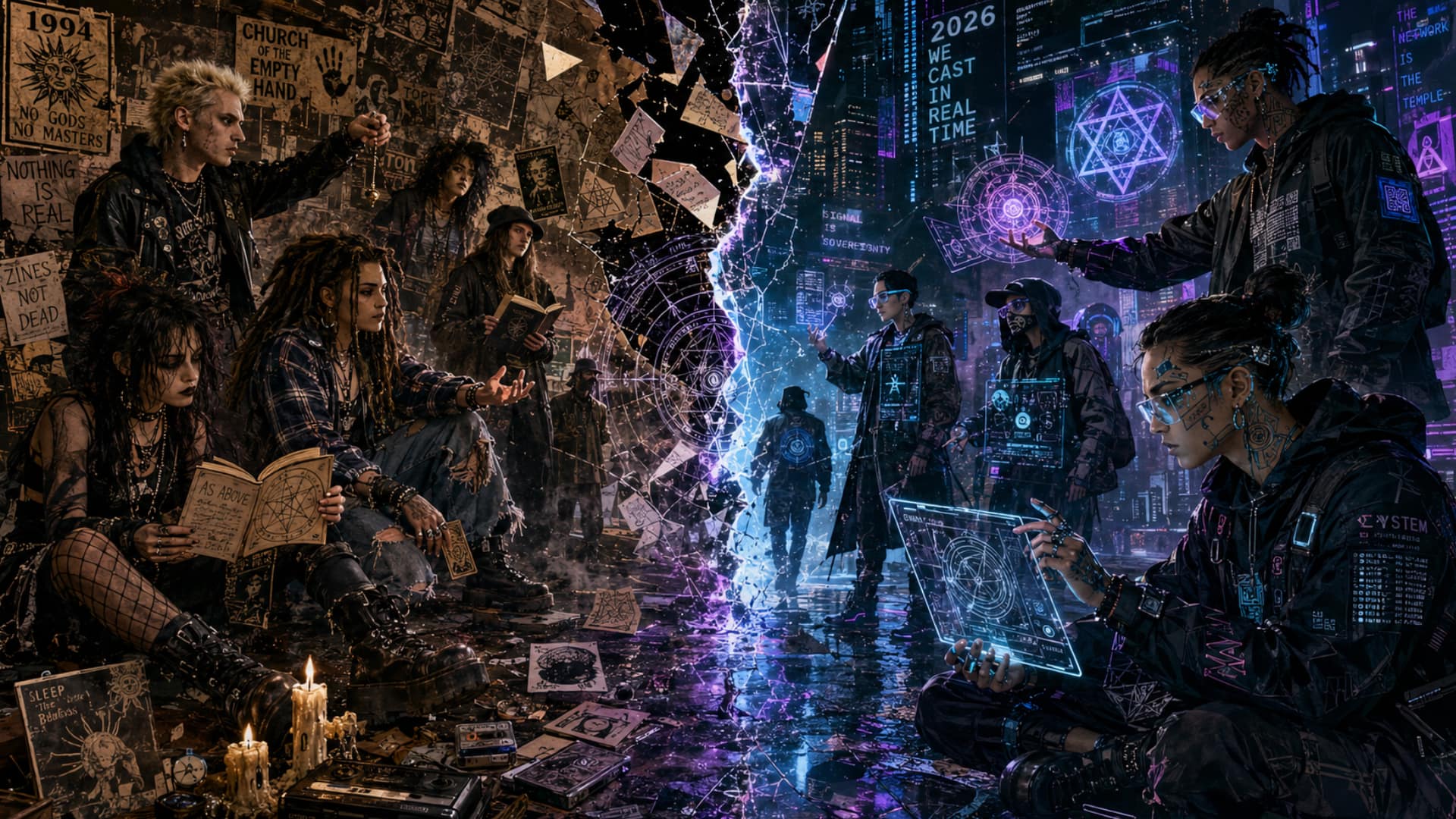
The original game grew out of this incredible weird moment — occult bookstores, goth clubs, zines, cyberpunk, a very specific ‘90s flavor of paranoia and possibility, that feeling like the world was maybe about to wake up or maybe about to eat itself. Mage took all of that and asked: what if your beliefs aren’t just your own private business? What if they push back on the world? What if reality is something people are actually fighting over, all the time, and most of us just can’t see it?

By 2018 that question had gotten a lot less abstract. Nobody needed to explain anymore why two people could look at the same event and come away with completely different versions of what happened. That was just Tuesday. Mage stopped feeling like a ‘90s artifact and started feeling like somebody had snuck a warning label onto the decade.

Now it's 2026 and look, I’m not trying to be gloomy here, but the situation has gotten genuinely strange. We’re not just fighting about what’s true. We’re fighting about what was made by a person, what was generated, what was edited, what some algorithm fed you because it figured you’d stay on the app another thirty seconds. I don’t think Mage fully saw that coming. Honestly that just makes it more interesting to me. The game keeps finding new ways to be relevant without trying.

One thing that stuck with me from that first interview — Satyros wasn’t precious about the old stuff. He said yeah, the ‘90s books were great (they really were), and they were very much products of the ‘90s. Some things were ahead of their time. Some cultural portrayals were made with good intentions and not enough understanding. He was just honest about it. And I appreciated that, because a game fundamentally about belief and power and who gets to define reality cannot be the kind of thing that sits in amber and says nope, we got it right, no notes.

The world moves. The game has to move. Otherwise what are we even doing.

Roleplaying in general has changed in ways nobody really mapped out ahead of time. Your game used to live at your table. Maybe a con. Now it lives on Twitch, on Discord (oh, and join our community on Discord), on a crowdfunding page, in a three-hour actual play video that somehow has a million views. A house rule can become a whole discourse before you’ve had your second coffee. It’s a lot.

Very Mage, honestly.

The thing I keep coming back to is the concept of focus in Mage 20. Paradigm, practice, instruments. Your mage has a specific belief about how reality works, acts on it in a specific way, and uses tools that fit their worldview. Not generic spell slots. Your prayer. Your code. Your tarot deck, your lab equipment, your old family story, the cigarette you light before things get bad, the conspiracy board in your kitchen that your roommate keeps asking about.

All of that is character. All of that is identity. All of that is yours.

That’s where Mage still gets me. It makes power personal. It doesn’t just ask what you can do. It asks why you think you’re the one who gets to do it. That’s a harder question. A better one.

Going back to that first episode now, I expected it to feel dated. I thought I’d cringe a little, you know how it is. Instead it just felt like opening a box and finding out whatever’s inside never actually stopped running.

What is real? Who gets to say? What do you believe, and what does believing it cost you?

You might think those were Mage questions.

Turns out they’re just questions. The game got there first, is all.

Contact us at magethepodcast@gmail.com with feedback and comments, and please help extend the reach of the show by sharing it with friends.


Follow Us

Listen on Apple Podcasts, Spotify, YouTube, or your favorite podcast app.

Join our Discord server.

Start Here

What is Mage?

Imagine a world where reality isn’t fixed, it changes depending on what people believe. In Mage: The Ascension, ordinary people awaken to the terrifying possibility that consensus shapes existence, and that with enough understanding and willpower, they can rewrite reality itself.

Unlike most fantasy roleplaying games, Mage isn’t about memorizing spells or leveling up. It’s about philosophy, belief, imagination, and the consequences of having the power to change the world. Every magical act asks a question: What do you believe is possible?

Whether you’re discovering Mage for the first time or returning after years away, Mage: The Podcast is your guide to one of tabletop gaming’s richest and most rewarding settings. We explore the game’s lore, rules, history, books, storytelling techniques, and the people who helped create it—all with the goal of helping you become a better player, Storyteller, and world builder.

Start with These Episodes

These five episodes are the best introduction to what makes Mage so unique. They cover the game’s core ideas, its origins, practical advice for your table, and some of the most fascinating corners of the World of Darkness.

If you’re only going to listen to one episode, start with What is Mage: The Ascension? featuring co-creator Satyros Brucato. It’s the perfect introduction to the game, and to everything that follows.

1. What is Mage: The Ascension?

⭐⭐⭐⭐⭐ Start here if you’re new to Mage

New to Mage? This is the perfect place to begin. Mage: The Ascension co-creator Satyros Brucato joins us to explain what makes Mage unlike any other roleplaying game—and why, decades later, players are still debating its ideas.

Perfect for: New players New players

2. The Gift, Twilight, and Grogs: Systems and Setting from Ars Magica

Before there was Mage, there was Ars Magica. Join Thrice Great as we explore the game that inspired Mage’s DNA—from troupe-style play and Covenants to a radically different vision of magic, wisdom, and consequences.

Perfect for: RPG Historians & Mage Veterans

3. Tomes of Magick: World of Darkness: Sorcerer

Not every magician is Awakened. Discover the hidden world of hedge wizards, miracle workers, alchemists, and occult practitioners as we unpack one of the most versatile, and often overlooked, magic systems in the World of Darkness.

Perfect for: Storytellers & World Builders

4. One Dot Sphere Effects

Think one-dot Spheres are weak? Think again. Charles and Terry break down every one-dot Sphere effect in M20, showing how the smallest magical abilities can become some of the most creative tools at your table.

Perfect for: Players & Storytellers

5. Tomes of Magick: M20 Book of the Fallen

The Nephandi are more than villains–they’re the nightmare at the heart of Mage. We explore Book of the Fallen, unpacking their philosophy, terrifying cosmology, and the storytelling tools that make them some of the most compelling antagonists in the World of Darkness.

Perfect for: Storytellers

Beginner Playlist: Learn Mage Without Getting Lost

New to Mage: The Ascension? Start here. These episodes explain the core idea of Mage, how magick works, what new characters can actually do, and how to bring the game to the table without getting buried in 700 pages of lore.

Contact us at magethepodcast@gmail.com with feedback and comments, and please help extend the reach of the show by sharing it with friends.

Follow Us

Listen on Apple Podcasts, Spotify, YouTube, or your favorite podcast app.

Join our Discord server.

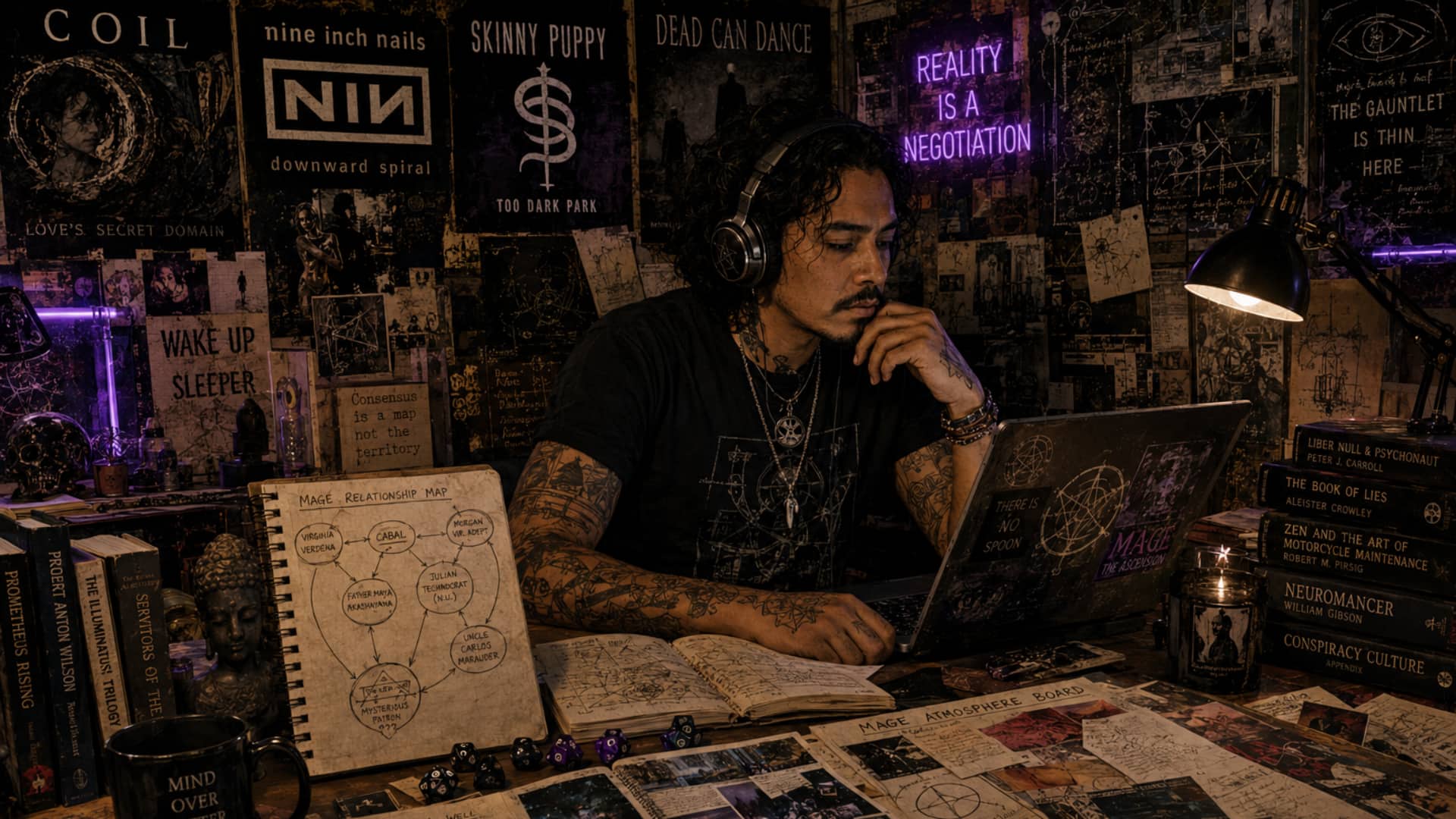
The Sound of Awakening: Building Atmosphere in Your Mage Chronicle

”The first spell your players experience isn't cast by a character. It's cast by the room.”

Rules matter. Characters matter. Your city matters.

But there’s another tool that's surprisingly powerful, and surprisingly underused.

Music.

Not background noise. Not a random Spotify playlist.

Atmosphere.

The right soundtrack tells your players what kind of reality they’ve stepped into before anyone says a word.

Every Chronicle Has a Sound

Mage: The Ascension isn’t just a game about magic. It’s a game about hidden truths. Urban myths. Conspiracy. Spiritual awakening. Decaying cities. Impossible technology. Late-night diners. Rain-soaked streets. Abandoned subway stations. Boardrooms where reality is negotiated one quarterly report at a time.

Your soundtrack should reflect that.

The music you choose teaches your players how to feel about the world.

Don’t Build a Playlist. Build Emotional States.

Instead of creating one giant playlist, organize your music by mood.

Awakening

Wonder. Curiosity. The impossible becoming possible.

The moment a Sleeper realizes the world isn’t what they were told.

Look for music that feels spacious, mysterious, and slightly transcendent.

Investigation

Libraries. Archives. Old maps. Occult bookstores. Corporate servers.

The quiet excitement of discovering a clue nobody was supposed to find.

Subtle ambient music works better than dramatic scores.

Urban Dread

The city at 2:00 a.m. Empty trains. Neon reflections on wet pavement. Something following you, but never quite visible.

This is where dark ambient, trip-hop, noir jazz, and industrial textures shine.

The Umbra

The Umbra should never sound comfortable.

It should feel ancient. Alien. Sacred. Beautiful. Dangerous.

Think choirs, drones, ritual percussion, and sounds that don’t quite belong to the modern world.

The Technocracy

Order. Precision. Efficiency. Control.

Minimal electronic music, glitch textures, deep drones, and sterile soundscapes help reinforce the Union’s worldview.

The Technocracy doesn’t think it's evil. It thinks it’s necessary. Its music should feel the same way.

The Traditions

Each Tradition deserves its own musical identity.

The Virtual Adepts shouldn’t sound like the Verbena.

The Akashayana shouldn’t sound like the Sons of Ether.

The Cult of Ecstasy almost certainly shouldn’t sound like anyone else.

Let your players recognize a faction before an NPC even speaks.

Our Recommendations

These artists and labels consistently capture the emotional landscape of Mage.

Cryo Chamber

Cryo Chamber may be one of the best labels for Mage atmosphere, especially if your chronicle leans toward the Umbra, Technocracy ruins, cosmic horror, abandoned constructs, occult investigation, or Nephandi dread.

The label specializes in cinematic dark ambient: deep drones, haunted soundscapes, ritual textures, post-human cities, and the feeling that reality has been quietly compromised.

Best for: Umbra scenes, Nephandi horror, Technocracy facilities, abandoned chantries, dream sequences, strange archives, and moments when players realize the world is much older and less stable than they thought.

Start with:

Use Cryo Chamber when you don’t want music to “score” a scene so much as infect it.

Nine Inch Nails

Nine Inch Nails is Industrial tension. Isolation. Technology. Transformation.

Perfect for Technocracy operations, abandoned laboratories, and chronicles where the machinery of Consensus is beginning to crack.

Massive Attack

Massive Attack is urban melancholy. Secrets. Late-night cities.

The feeling that someone is watching.

Ideal for investigative chronicles, street-level mysteries, and cabals who meet in bad apartments above worse nightclubs.

Dead Can Dance

Dead Can Dance is ancient ritual. Sacred mystery. The Umbra. Dreams.

Perfect for Spirit chronicles, ecstatic visions, funerary rites, forgotten temples, and moments of transcendence.

Coil

Coil is occult experimentation made audible.

Uncomfortable. Beautiful. Strange.

If any band accidentally wrote a soundtrack for Mage, it might be Coil.

Use carefully. Coil can turn a normal scene into something unstable very quickly.

Bohren & der Club of Gore

Imagine jazz playing in an empty city where reality has quietly stopped working. That’s Bohren & der Club of Gore.

Slow. Patient. Uneasy.

Excellent for detective stories, supernatural noir, late-night investigations, and conversations with people who know more than they should.

Trent Reznor & Atticus Ross

Modern dread. Minimalism. Psychological pressure.

Trent Reznor & Atticus Ross works beautifully during investigation scenes and quiet conversations where everyone knows something terrible is coming.

Beyond Music

Atmosphere isn’t only sound.

Consider adding:

  • Rain against windows
  • Train stations
  • Cathedral echoes
  • CRT monitor hum
  • Coffee shop ambience
  • Distant church bells
  • Industrial machinery
  • Electrical interference
  • Wind through abandoned buildings
  • Tape hiss
  • Radio static
  • Elevator drones
  • Server-room noise
  • Subway brakes
  • Distant sirens

Small sounds can make your world feel larger than your table.

How to Use Music Without Overpowering the Game

The best soundtrack supports the scene without fighting the players.

Keep it low.

Avoid lyrics during important dialogue unless the song is meant to dominate the moment.

Use different playlists for different emotional states.

And don’t be afraid of silence.

In Mage, silence can be as powerful as music.

A sudden lack of sound can tell players something has changed before they understand what.

A Soundtrack Is Worldbuilding

Players remember feelings longer than they remember mechanics.

Years from now they may not remember exactly how Correspondence worked.

They will remember that one piece of music that played while they stepped into the Umbra for the first time.

Or the track that was quietly playing when they realized their mentor had been lying to them for months.

That’s atmosphere. That’s storytelling. That’s Mage.

We’d Love to Hear Yours

Every Storyteller has discovered an artist, album, or playlist that somehow feels like Mage. Tell us what belongs on the soundtrack to Awakening.

Share your recommendations in our Discord, or tag us on social media. We’ll keep expanding this list as the community discovers new sounds that make the Tellurian come alive.

Because every chronicle has a soundtrack.

The only question is whether you’ve chosen it yet.

Contact us at magethepodcast@gmail.com with feedback and comments, and please help extend the reach of the show by sharing it with friends.
Follow Us

Listen on Apple Podcasts, Spotify, YouTube, or your favorite podcast app.

Join our Discord server.

Chronicle Planning: Building Mage Campaigns That Change the Way Your Players See Reality

”A Mage chronicle isn’t about saving the world. It's about discovering which world you're actually living in.”

One of the biggest mistakes new Storytellers make is trying to write a Mage-chronicle like it’s a fantasy adventure.

A villain. A quest. Three acts. A final battle.

Mage-can certainly tell stories like that, but the game’s greatest strength lies somewhere else.

Mage-asks questions.

What is reality?

Who decides what’s true?

What would you sacrifice to change the world?

What happens when your deepest beliefs collide with someone else’s?

The best chronicles don’t begin with a plot. They begin with a question.

Start With a Theme, Not a Villain

Before you write your first scene, ask yourself:

What is this chronicle really about?

Not what happens. What it means.

Examples:

  • The price of certainty
  • Technology replacing faith
  • Tradition versus progress
  • Identity in the digital age
  • The corruption of good intentions
  • Memory versus history
  • What happens when everyone believes a comforting lie?

Once you know the question, every NPC, faction, and mystery begins orbiting that central idea.

Build a City, Not a Dungeon

Mage-thrives in places that already feel alive.

Your city isn’t just a backdrop.

It's another character.

Ask yourself:

  • Who secretly controls this city?
  • Where do mages gather?
  • Which neighborhoods feel haunted?
  • What happened here fifty years ago?
  • Where does the Gauntlet feel thin?
  • What does the Technocracy own?
  • What stories do Sleepers tell themselves that aren't quite true?

When players care about the city, every victory, and every loss, feels personal.

Create Factions With Competing Truths

One of Mage’s greatest strengths is that nearly everyone believes they’re right.

The Traditions aren’t “good.” The Technocracy isn’t “evil. The Nephandi don’t think they’re monsters.

Build every faction around a worldview rather than an alignment.

Ask:

  • What do they believe?
  • Why are they convinced they're saving the world?
  • What would make them compromise?
  • What line will they never cross?

Conflict becomes far more interesting when everyone has a point.

Think in Mysteries, Not Encounters

Players rarely remember combat. They remember revelations.

Instead of asking:

"What fight happens next?"

Ask:

"What truth do they discover next?"

Perhaps the local chantry is secretly funded by Pentex. Maybe their mentor isn’t Awakened at all. Possibly the Marauder they’ve been hunting is the only person telling the truth.

Mage is at its best when every answer creates two new questions.

Let the Cabal Drive the Story

Don’t write a story for your players. Write a world that reacts to them.

Every character should arrive with:

  • A belief worth challenging
  • Someone they trust
  • Someone they fear
  • Someone who wants something from them
  • A personal mystery
  • A reason to Awaken

When players make meaningful choices, your chronicle becomes theirs, not yours.

Embrace Consequences

Reality pushes back. Not just through Paradox. Every magical decision changes relationships.

Political alliances. The Consensus. The Umbra.

Even small victories should leave ripples behind.

The world should remember what the cabal has done.

Use Atmosphere as a Storytelling Tool

Chronicle planning isn’t only maps and NPCs. It’s mood.

What does your city sound like? What colors define it? What music plays during quiet conversations? What smells linger inside abandoned chantries?

When your players remember a chronicle years later, they’ll remember how it felt-more than how many successes they rolled.

Build Layers

The best Mage chronicles reward curiosity. Create mysteries inside mysteries.

The abandoned church isn’t just haunted. It’s built over a forgotten Node. The Node isn’t just powerful. It’s connected to an impossible place in the Umbra. That place isn’t just dangerous. Someone has been hiding there for decades.

Every discovery should make the world feel larger.

Recommended Mage: The Podcast Episodes

Looking for inspiration? These episodes pair especially well with chronicle planning:

What Is Mage: The Ascension?

If you’re introducing new players or rediscovering the game yourself, this is the best place to start. It lays the philosophical foundation for everything that follows.

Guide to the Traditions

A deep dive into the Traditions and the competing worldviews that shape Mage. Essential listening when designing factions, mentors, and political conflicts.

Technocracy Reloaded

Want to create memorable antagonists? This discussion explores the modern Technocracy and why its members often believe they’re the heroes of the story.

One-Dot Sphere Effects

Perfect for Storytellers who want to encourage creative magic instead of treating Spheres like a spell list.

The Perils of Paradox

Paradox isn’t just punishment. It’s one of the game’s most powerful storytelling tools. This episode explores how reality itself responds when mages push too far.

Top 5 Books to Run a Mage Chronicle

Our recommendations for the supplements that will give your chronicles more depth, better antagonists, stronger themes, and richer stories.

Read Widely

Some of the best Mage inspiration isn’t found in Mage books.

Read philosophy. Study comparative religion. Browse conspiracy history. Visit art museums. Read cyberpunk. Walk unfamiliar neighborhoods. Listen to strange music. Collect blog posts. Follow threads that don't seem connected.

Mage rewards curiosity. So should its Storytellers.

The World Is Already Strange

The best Mage chronicles don’t ask players to imagine an impossible world.

They ask them to look at the real one a little differently.

Once your players start questioning what’s behind the next door, beneath the next city block, or hidden inside the next news story…

…you’ve succeeded.

Continue Your Journey

Looking for more tools?

-Read our Storytelling Tools-guide.

-Explore our Music & Atmosphere-recommendations.

-Browse our Plot Hooks-collection.

-Join our Discord and swap chronicle ideas with Storytellers from around the world.

Reality is negotiable.

Your chronicle should be too.

Storytelling Tools for Mage: The Ascension

Mage: The Ascension is not a game that rewards overplanning. It rewards preparation. That difference matters.

Overplanning says, “Here is the story my players will follow.”

Preparation says, “Here is a living world full of beliefs, factions, mysteries, consequences, and dangerous choices. Let’s see what happens when the cabal touches it.”

That is where Storytelling Tools come in. Not tools that make Mage smaller. Tools that make Mage playable.

Why Mage Needs Storytelling Tools

Mage is rich, strange, philosophical, contradictory, and occasionally overwhelming. That is part of its charm. It is also why a Storyteller can sit down with the core book, stare at hundreds of pages of brilliant material, and wonder: “Okay. But what do I actually run on Friday?”

Storytelling Tools help bridge the gap between big ideas and table play.

They turn themes into sessions. They turn factions into conflicts. They turn character beliefs into drama. They turn “reality is negotiable” into something your players can actually experience.

1. Session Zero Worksheet

Every Mage chronicle should begin with a conversation.

Before anyone chooses Spheres, before anyone builds a cabal, before anyone starts arguing about whether a smartphone counts as a Focus, the group needs to answer one question: What kind of Mage game are we playing?

A Session Zero worksheet can help establish:

  • Chronicle tone
  • Street-level or cosmic scale
  • Traditions, Technocracy, Orphans, or mixed cabal
  • Level of horror
  • Expected weirdness
  • Use of Paradox
  • Safety tools and boundaries
  • Player goals
  • Character connections
  • How much rules precision the table wants

Mage can be occult horror, philosophical conspiracy, urban fantasy, political thriller, cosmic weirdness, or personal awakening.

Your table needs to know which door it is opening.

2. Chronicle Planning Sheet

A good Mage chronicle does not start with a villain. It starts with a question.

Try building your chronicle around one of these:

  • Who controls reality in this city?
  • What lie keeps the peace?
  • What truth would destroy the cabal?
  • What does the Technocracy protect that the Traditions refuse to understand?
  • What price does Awakening demand?
  • What happens when a player’s Paradigm is wrong, incomplete, or dangerous?

A Chronicle Planning Sheet should include:

  • Central theme
  • Primary city or setting
  • Main factions
  • Major mysteries
  • Key NPCs
  • Nodes, chantries, constructs, and sacred spaces
  • Recurring symbols
  • Tone references
  • Opening situation
  • Escalation path
  • Possible consequences

Do not write the ending. Write pressure. Then let the players create the explosion.

3. Character Belief Questionnaire

Mage characters are not just people with powers. They are people with a theory of reality. That theory should matter.

A Character Belief Questionnaire can ask:

  • What does your character believe is fundamentally true?
  • What do they think most Sleepers misunderstand?
  • What did Awakening cost them?
  • Who taught them how the world works?
  • What would make them doubt their Paradigm?
  • What kind of magic feels natural to them?
  • What kind of magic feels offensive, false, or dangerous?
  • Who do they trust?
  • Who do they owe?
  • What do they want badly enough to risk Paradox?

This tool helps players build mages who are more than Sphere combinations.

It gives the Storyteller levers to pull.

4. Paradigm and Focus Worksheet

Paradigm is one of the best parts of Mage. It is also one of the easiest parts to flatten.

A good worksheet helps players move from vague concepts like “chaos magician” or “techno-wizard” into specific practices.

Ask:

  • What does your character believe magic is?
  • Where does power come from?
  • Why does their magic work?
  • What tools, rituals, technologies, prayers, movements, or symbols do they use?
  • What would make their magic fail?
  • What does vulgar magic look like for them?
  • What does coincidental magic look like?
  • How do they explain Paradox?

Once a player can answer those questions, magic becomes personal.

Not just “I roll Forces.”

But “I reroute the city’s electrical grid through a stolen saint’s relic and a broken pager because all systems are prayers if enough people depend on them.”

That is Mage.

5. Relationship Map

Mage chronicles become easier to run when you can see who wants what.

A relationship map tracks:

  • Player cabal members
  • Mentors
  • Rivals
  • Chantry leadership
  • Technocracy agents
  • Sleepers
  • Cults
  • Spirits
  • Nephandi
  • Marauders
  • Vampires, werewolves, ghosts, or other crossover forces
  • Debts, secrets, alliances, betrayals, and favors

This is especially useful because Mage is rarely just about combat.

It is about pressure.

Who is watching the cabal? Who is using them? Who wants them protected? Who wants them erased? Who thinks they are useful but expendable?

A relationship map turns your chronicle into a web. Tug one strand and the whole city moves.

6. Faction Agenda Sheet

Every major faction should have three things:

  • A belief
  • A goal
  • A line they will not cross

The Traditions, Technocracy, Crafts, Nephandi, Marauders, and local factions all become more useful when they are treated as living organizations instead of lore entries.

For each faction, write:

  • What do they believe?
  • What do they want in this city?
  • What resources do they control?
  • What are they afraid of?
  • What are they hiding?
  • What would make them cooperate with the cabal?
  • What would make them betray the cabal?
  • What do they misunderstand?

The strongest Mage antagonists usually believe they are saving the world. That is what makes them dangerous.

7. Paradox Consequence Table

Paradox should not feel like a parking ticket from reality. It should feel like reality noticing.

A Paradox Consequence Table can help you improvise effects that fit the tone of your chronicle.

Consequences might include:

  • Strange coincidences
  • Dreams that bleed into waking life
  • Temporary sensory distortions
  • Bad luck
  • Spirit attention
  • Technocratic detection
  • Witnesses remembering things differently
  • Reality scars
  • Symbolic backlash
  • Paradox spirits
  • Removal into a Paradox Realm

The goal is not to punish creativity. The goal is to remind players that magic has weight.

8. Scene Framing Checklist

Mage sessions can sprawl. That is not always bad, but a checklist helps every scene carry weight.

Before a scene starts, ask:

  • What is the purpose of this scene?
  • What does the cabal want?
  • What does someone else want?
  • What new information can be discovered?
  • What choice can be made?
  • What might change afterward?
  • What sensory detail makes this feel like Mage?

That last one matters.

A flickering fluorescent light. A saint card tucked into a server rack. A homeless prophet reciting stock prices. A rainstorm that only falls on one building. A mirror that reflects the room from yesterday.

Mage lives in details like that.

9. Mystery Tracker

Mage loves secrets. But secrets need structure.

Use a Mystery Tracker to organize:

  • Core mystery
  • Surface clues
  • Hidden clues
  • False leads
  • NPCs who know partial truths
  • What the Technocracy thinks is happening
  • What the Traditions think is happening
  • What is actually happening
  • What happens if the cabal does nothing

The best Mage mysteries are not puzzles with one correct answer.

They are realities under negotiation.

10. Atmosphere Board

Your chronicle should have a mood.

Build a simple atmosphere board with:

  • Images
  • Music
  • Films
  • Colors
  • Locations
  • Symbols
  • Quotes
  • Fashion
  • Architecture
  • Album covers
  • News clippings
  • Conspiracy diagrams
  • Occult art
  • Technology references

This gives everyone a shared visual and emotional language.

A Virtual Adept chronicle should not feel like a Verbena chronicle. A Chicago street-level mystery should not feel like an Umbrood pilgrimage.

Your atmosphere board helps the table enter the same world.

11. NPC Card Template

Mage NPCs should be easy to run.

For each important NPC, write:

  • Name
  • Faction
  • Role
  • Public face
  • Private agenda
  • Magical style
  • What they want from the cabal
  • What they can offer
  • What they are hiding
  • One memorable detail

Do not overstat them. Make them playable. One great detail is better than three pages of biography.

12. After-Session Debrief

After every session, write down:

  • What changed?
  • What did the players care about?
  • Which NPCs landed?
  • What questions did they ask?
  • What consequences are now in motion?
  • What did they misunderstand in an interesting way?
  • What should return later?

This is how you make the chronicle feel responsive.

Mage works best when players sense the world reacting to them.

Not because the Storyteller planned everything. Because the Storyteller was listening.

The Tool Is Not the Game

None of these tools are required.

You can run Mage with a book, some dice, and a group of people willing to chase impossible ideas.

But tools help.

They reduce friction. They organize complexity. They make it easier to preserve what makes Mage beautiful without getting lost in the machinery.

Use what helps. Ignore what does not. Hack the rest.

That is also Mage.

Keep Building the Toolkit

If you want to keep going, start with these Mage: The Podcast resources:

Mage is a game about changing reality.

The right tools help you make that reality easier to enter, stranger to explore, and harder to forget.

Contact us at magethepodcast@gmail.com with feedback and comments, and please help extend the reach of the show by sharing it with friends.

Follow Us

Listen on Apple Podcasts, Spotify, YouTube, or your favorite podcast app.

Join our Discord server.

Session Zero Tools for Mage: The Ascension

Session Zero Tools for Mage: The Ascension

Before the first die roll, get everyone aligned.

That sounds simple.

It is not.

Mage: The Ascension can be street-level occult mystery, cosmic horror, philosophical conspiracy, urban fantasy, Technocracy espionage, punk rebellion, spiritual awakening, or a room full of people arguing about whether reality is a prison, a dream, a machine, or a bad habit.

All of those are valid. Not all of them belong in the same chronicle. That is why Session Zero matters.

A good Session Zero does not kill mystery. It gives the mystery somewhere to grow.

What Is Session Zero?

Session Zero is the conversation before the campaign begins.

It is where players and Storytellers agree on what kind of game they are playing, what kind of experience they want, and what everyone needs to have fun.

For Mage , this is especially important because the game is big.

Very big.

Mage can handle almost anything. That does not mean your chronicle should include everything. Session Zero helps you decide what this version of Mage is going to be.

Start With the Big Question

Before character sheets, before Spheres, before factions, ask: What kind of Mage game are we actually playing?

Some possible answers:

  • Newly Awakened mages discovering the hidden world
  • Street-level occult investigation
  • Chantry politics and Tradition drama
  • Technocracy agents trying to protect the world
  • A mixed cabal caught between factions
  • Umbra exploration and spirit weirdness
  • Nephandi horror
  • Cyberpunk reality hacking
  • Magical academia
  • Punk rebellion against Consensus
  • Personal drama about belief, trauma, and transformation
  • Gonzo metaphysical chaos

None of these are wrong. But the table should know which game it is choosing.

Define the Tone

Tone is the emotional contract of the chronicle. Ask your table what the game should feel like.

Should it be:

  • Dangerous?
  • Funny?
  • Tragic?
  • Weird?
  • Romantic?
  • Political?
  • Investigative?
  • Philosophical?
  • Hopeful?
  • Bleak?
  • Personal?
  • Epic?

Mage often works best when you choose a few dominant tones rather than trying to do everything at once.

For example:

Urban occult mystery with moments of absurd cosmic horror is much clearer than everything from the Mage books.

A clear tone helps players build better characters. It also helps the Storyteller know what kind of scenes belong.

Set the Scale

Mage changes dramatically depending on scale.

A street-level chronicle about one haunted neighborhood is different from a cosmic chronicle about rewriting the rules of reality. Both can be excellent.

Ask:

  • Are we protecting one neighborhood, one city, the world, or reality itself?
  • Are the characters newly Awakened, experienced mages, or powerful Masters?
  • Are the threats local, factional, spiritual, cosmic, or personal?
  • Will the story mostly happen in the mundane world, the Umbra, Horizon Realms, or all of the above?

A smaller scale is often easier for new groups. A bigger scale can work beautifully once everyone knows what kind of Mage they want.

Talk About Safety and Boundaries

Mage can touch intense material.

For example:

  • Religion.
  • Trauma
  • Mental health
  • Cults
  • Conspiracy
  • Body horror
  • Abuse of power
  • Apocalypse
  • Possession
  • Institutional control
  • Spiritual crisis

That does not mean every table wants every subject.

Use Session Zero to discuss:

  • Lines: material that should not appear
  • Veils: material that can exist but should happen off-screen
  • Topics that need extra care
  • How players can pause or redirect a scene
  • Whether horror should be psychological, occult, cosmic, political, physical, or minimal

Safety tools do not weaken horror. They make trust possible. And trust lets players go deeper.

Establish Player Expectations

Mage can create very different expectations at the table.

Some players want philosophical arguments. Some want action. Some want investigation. Some want magical problem-solving. Some want character drama. Some want faction politics. Some want to bend reality until it screams.

Ask each player:

  • What do you want more of?
  • What do you want less of?
  • What kind of scenes excite you?
  • What kind of scenes bore you?
  • Do you like puzzles?
  • Do you like combat?
  • Do you like political negotiation?
  • Do you like moral dilemmas?
  • Do you want your character’s beliefs challenged?

You are not trying to satisfy everyone in every session.

You are trying to understand what everyone came to play.

Build Character Connections Early

Mage works best when the cabal has reasons to care about each other. Do not wait for that to happen accidentally.

During Session Zero, ask:

  • How did the cabal meet?
  • Who trusts whom?
  • Who has history?
  • Who owes someone a favor?
  • Who disagrees about magic?
  • Who shares a mentor?
  • Who saw something together they cannot explain?
  • Who is hiding something from the rest of the cabal?
  • Why do these people keep working together?

A cabal does not need to be harmonious. In Mage, disagreement is often the point. But the group needs enough connection to stay in the same story.

Discuss Paradigm Before Play

Paradigm is not decoration. It is the heart of a Mage character.

Ask each player:

  • What does your character believe reality is?
  • What do they believe magic is?
  • Why does their magic work?
  • What practices, tools, rituals, technologies, prayers, movements, substances, symbols, or systems do they use?
  • What kind of magic feels wrong to them?
  • What would challenge their worldview?
  • What would make them doubt themselves?

This prevents magic from becoming a generic power list. A Virtual Adept, a Verbena, and a Celestial Chorister may all use Life. They should not all feel like they are doing the same thing.

Agree on Rules Weight

Mage can be played loose, precise, or somewhere in between. Talk about that up front.

Ask:

  • How much rules discussion do we want during play?
  • Should magical effects be negotiated quickly or carefully built?
  • How strict should Sphere requirements be?
  • How much does Paradigm limit what characters can do?
  • How often should Paradox appear?
  • Are we using optional rules?
  • What books are allowed?

Some tables love detailed Sphere debates. Others want fast rulings and narrative flow. Both approaches are valid. The problem happens when half the table expects one and half expects the other.

Decide How Paradox Feels

Paradox is one of Mage’s signature tools. It can be funny, terrifying, subtle, cosmic, symbolic, or brutally immediate.

Ask the table:

  • Should Paradox be rare or common?
  • Should it feel punitive or mysterious?
  • Should it mostly create complications, horror, or direct harm?
  • Should Paradox spirits appear?
  • How strange should Paradox Realms become?
  • Does the group want vulgar magic to feel dangerous?

Paradox teaches players how this reality reacts to magic.

Decide what lesson it teaches.

Choose Chronicle Themes

Themes help everyone aim in the same direction.

Possible Mage themes include:

  • The price of power
  • Belief versus truth
  • Freedom versus control
  • Tradition versus progress
  • Spiritual awakening
  • Institutional manipulation
  • Reality as prison
  • Reality as art
  • The danger of certainty
  • The corruption of good intentions
  • The loneliness of seeing too much
  • Technology as magic
  • Magic as responsibility

Pick two or three. Then use them as a compass. When in doubt, ask: does this scene speak to one of our themes?

Create the Opening Situation

You do not need to plan the whole chronicle. You need a strong beginning.

During or after Session Zero, define:

  • Where the chronicle begins
  • What has recently changed
  • Who needs the cabal
  • What mystery is already in motion
  • What danger is approaching
  • What each character personally wants
  • Why the cabal cannot simply walk away

A good opening situation creates pressure. It should not dictate the solution.

Make a Shared Reference List

Mage is easier when everyone shares a vibe. Build a short reference list together.

Include:

  • Movies
  • TV shows
  • Books
  • Comics
  • Music
  • Art
  • Cities
  • News stories
  • Historical events
  • Philosophical ideas
  • Occult references

This helps everyone understand the chronicle’s atmosphere.

“The Matrix meets The X-Files with a little Sandman and paranoid 90s industrial music” is often more useful than five pages of setting notes.

Session Zero Checklist

Use this as a starting point.

Before play begins, agree on:

  • Chronicle concept
  • Tone
  • Scale
  • Setting
  • Safety tools
  • Lines and veils
  • Player expectations
  • Character connections
  • Factions in play
  • Paradigm expectations
  • Rules weight
  • Paradox style
  • Themes
  • Opening situation
  • Allowed books
  • Scheduling
  • Communication between sessions

Write the answers down. Future you will be grateful.

Questions Every Player Should Answer

Before the first session, each player should know:

  • What does my character believe?
  • What changed when they Awakened?
  • What do they want?
  • What are they afraid is true?
  • Who taught them?
  • Who do they owe?
  • Who do they protect?
  • What would tempt them?
  • What would break their faith?
  • Why are they part of this cabal?

These questions do more than build backstory. They give the Storyteller fuel.

Questions Every Storyteller Should Answer

Before the first session, the Storyteller should know:

  • What is the chronicle really about?
  • What is unstable in the setting?
  • Who benefits from the current reality?
  • Who wants the cabal involved?
  • Who wants them gone?
  • What truth is hidden?
  • What happens if the cabal does nothing?
  • What does the city feel like?
  • How will reality push back?

You do not need every answer. But you need enough to start asking better questions.

Session Zero Is Not a Contract With the Dead

The decisions you make in Session Zero are important. They are not prison bars.

Chronicles evolve. Players discover what they enjoy. Characters surprise everyone. The Storyteller finds better ideas. Reality changes.

Check in after a few sessions and ask:

  • Is this still the game we want?
  • What is working?
  • What needs more attention?
  • What should we do less often?
  • What has become more interesting than expected?

A good Mage chronicle should mutate. That is healthy.

The Goal Is Alignment, Not Control

Session Zero is not about removing surprise.

It is about making sure the surprise lands.

When everyone understands the tone, themes, boundaries, and expectations, the table has more freedom, not less.

Players take bigger risks. Storytellers make stronger choices. The cabal feels more connected. The world feels more coherent. And when reality finally cracks, everyone understands why it matters.

Before the first die roll, get everyone aligned. Then let the impossible in.

Related Mage: The Podcast Episodes and Resources

Start here if you want more help preparing your chronicle:

Mage asks what reality is.

Session Zero asks what reality your table wants to explore.

Contact us at magethepodcast@gmail.com with feedback and comments, and please help extend the reach of the show by sharing it with friends.

Follow Us

Listen on Apple Podcasts, Spotify, YouTube, or your favorite podcast app.

Join our Discord server.

Relationship Maps for Mage: The Ascension

Mage is full of factions, mentors, rivals, cabals, chantries, constructs, cults, spirits, informants, enemies, and people who know too much.

A relationship map can save your chronicle.

Not because Mage needs more paperwork. Because Mage is a game about pressure.

  • Who owes whom?
  • Who taught whom?
  • Who betrayed whom?
  • Who knows the truth?
  • Who thinks they know the truth?
  • Who wants the cabal alive, useful, compromised, recruited, silenced, or erased?

That is where the story lives.

What Is a Relationship Map?

A relationship map is a visual tool that shows how characters, factions, locations, secrets, and conflicts connect.

It can be simple.

A circle for the cabal. A few names around it. Lines showing alliances, grudges, debts, secrets, and threats.

That’s enough.

The goal is not to create beautiful graphic design. The goal is to make the invisible structure of the chronicle visible. In Mage, that structure matters. Because the cabal is rarely dealing with one problem.

They are dealing with a web.

Why Relationship Maps Work So Well for Mage

Mage is not only about what characters can do. It is about what they believe. That means every relationship has ideological weight.

A mentor is not just a teacher. They are a worldview with a face.

A rival is not just an obstacle. They are proof that another kind of magic works.

A Technocrat is not just an antagonist. They may be someone who genuinely believes the cabal is dangerous.

A cult is not just a plot hook. It may be a failed attempt at Awakening.

A chantry is not just a clubhouse. It is politics, history, grudges, resources, secrets, and shared danger.

A relationship map helps you keep all of that alive.

Start With the Cabal

Put the player characters at the center.

Then ask:

  • Who trusts whom?
  • Who disagrees about magic?
  • Who has history?
  • Who shares a mentor?
  • Who owes someone an apology?
  • Who saw something together they cannot explain?
  • Who is hiding something?
  • Who would risk Paradox for another character?
  • Who would not?

The cabal does not need to be harmonious.

In Mage, disagreement can be fuel. But the Storyteller should understand the emotional architecture of the group.

Add Mentors

Every Mage mentor is a gift to the Storyteller. A mentor can provide guidance, resources, misinformation, pressure, guilt, affection, manipulation, or unfinished business.

For each mentor, write:

  • What did they teach?
  • What did they leave out?
  • What do they want from the student?
  • What do they fear the student will become?
  • What faction do they serve?
  • What secret are they hiding?
  • What mistake did they make years ago that is now returning?

A good mentor should be helpful. A great mentor should be complicated.

Add Rivals

Rivals are better than enemies. Enemies want the cabal gone. Rivals want to prove something. A rival can challenge a character’s beliefs, methods, status, ethics, or magical style.

Ask:

  • What does the rival believe?
  • Why do they think the player character is wrong?
  • What do they envy?
  • What do they pity?
  • What do they know that the cabal does not?
  • What would make them cooperate?
  • What would make them cross the line?

Mage thrives when conflict is philosophical as well as practical.

Add Factions

Now place the larger forces around the cabal.

  • Traditions
  • Technocracy
  • Crafts
  • Nephandi
  • Marauders
  • Spirits
  • Sleepers
  • Vampires
  • Werewolves
  • Governments
  • Corporations
  • Cults
  • Academic departments
  • Occult bookstores
  • Noise scenes
  • Mutual aid networks
  • Private security firms
  • Churches
  • Startups
  • Secret societies.

Each faction needs only three things:

  1. What they believe.
  2. What they want.
  3. What they will do if ignored.

That last one is important. The world should move even when the cabal does nothing.

Use Different Line Types

Make the map easy to read.

Use different kinds of lines:

  • Solid line: alliance
  • Dotted line: suspicion
  • Red line: active hostility
  • Blue line: debt
  • Purple line: magical connection
  • Broken line: secret relationship
  • Arrow: one-sided influence
  • Circle: shared resource or location

You do not need fancy software. Notebook paper works. Index cards work. A whiteboard works. A corkboard with string works if you want to fully embrace the conspiracy-wall aesthetic.

Map Secrets Separately

Some relationships should be visible to players. Others should remain Storyteller-only.

For example:

Visible:

  • The cabal knows their mentor dislikes the local Hermetic chantry.
  • The Technocracy is monitoring a downtown Node.
  • A local cult is recruiting Sleepers.

Hidden:

  • The mentor used to be part of that chantry.
  • The Technocracy is protecting the Node from something worse.
  • The cult’s leader is receiving dreams from a Marauder.

A good relationship map lets you track both the surface story and the hidden machinery underneath it.

Include Locations

In Mage, places matter.

Add important locations to your map:

  • Chantries
  • Constructs
  • Nodes
  • Libraries
  • Clubs
  • Churches
  • Hospitals
  • Universities
  • Corporate offices
  • Abandoned malls
  • Subway stations
  • Occult shops
  • Server farms
  • Dream-haunted apartments
  • Places where the Gauntlet feels thin

Then connect people to places.

  • Who controls the Node?
  • Who meets at the club?
  • Who died in the church basement?
  • Who owns the building through three shell companies?
  • Who refuses to go near the train station after midnight?

Locations become story engines when people want them, fear them, or lie about them.

Track Pressure, Not Just Information

A relationship map is not only a reference tool. It is a pressure machine.

Every few sessions, look at the map and ask:

  • Who has been ignored?
  • Who is getting nervous?
  • Who sees an opportunity?
  • Who feels betrayed?
  • Who wants repayment?
  • Who would make the next move?
  • Who has misunderstood the cabal’s actions?
  • Who benefits from escalating the conflict?

This keeps the chronicle alive. Instead of inventing random events, you let the map tell you what happens next.

Example: A Simple Mage Relationship Map

Start with:

The Cabal

Connected to:

Mentor A
Helpful, but hiding a past deal with the Technocracy.

Local Chantry Council
Wants the cabal useful, obedient, and out of trouble.

Technocracy Field Agent
Believes the cabal is reckless but not yet disposable.

Occult Bookstore Owner
Sleeper ally who knows more than they should.

Cult Leader
Recruiting people near a weak Node.

Marauder
Appears in dreams and may be warning the cabal.

Old Rival Cabal
Competing for status, resources, and moral superiority.

Now add lines:

  • Mentor A owes the Technocracy Field Agent.
  • The Cult Leader is unknowingly influenced by the Marauder.
  • The Bookstore Owner used to date someone on the Chantry Council.
  • The Rival Cabal wants the same Node.
  • The Technocracy Agent is protecting the Node from an entity in the Umbra.

That is already enough for months of play.

Player-Facing Maps

Consider letting players build part of the relationship map.

Ask them to add:

  • One ally
  • One rival
  • One person they owe
  • One person who owes them
  • One place that matters to them
  • One unresolved relationship
  • One secret connection

This gives players ownership of the chronicle. It also gives the Storyteller ready-made hooks.

When a player creates an NPC, they are telling you, “This person matters to me.”

Believe them. Use that.

Storyteller-Only Maps

Your private map can include deeper layers:

  • Hidden faction agendas
  • Secret identities
  • Unseen supernatural influence
  • Long-term conspiracies
  • Paradox consequences
  • Future betrayals
  • Blackmail material
  • Sleeping threats
  • Who is lying about what

Do not overcomplicate it. A map should make the game easier to run, not harder. If the map becomes a burden, simplify it.

Update the Map After Each Session

After every session, spend five minutes updating the map.

Ask:

  • Did someone gain a new ally?
  • Did someone make an enemy?
  • Did a secret come out?
  • Did a faction change its opinion of the cabal?
  • Did a relationship become strained?
  • Did the players care about an NPC more than expected?
  • Did they ignore someone dangerous?

Mage chronicles become stronger when the world remembers.

Relationship Maps Make Consequences Visible

The most satisfying moments in Mage often come from consequences. Not punishment. Consequences.

  • The cabal saves a spirit and angers a chantry.
  • They expose a Technocratic operation and create a power vacuum.
  • They help a cult member Awaken and accidentally create a rival.
  • They humiliate an enemy who later returns with better information.
  • They protect a Node and become responsible for it.

A relationship map helps you track the ripples. The players do something. The web moves. Reality responds.

Recommended Mage: The Podcast Episodes and Resources

These episodes pair well with relationship-map planning:

The Map Is Not the Territory

A relationship map is not the chronicle. It is a tool. Use it until it helps. Change it when the players surprise you. Ignore it when the table finds something better.

Mage is a game about changing reality. Your notes should be allowed to change too. But when the cabal is surrounded by factions, mentors, rivals, chantries, constructs, cults, spirits, and people who know too much, a relationship map gives you one precious advantage:

You can see the web before it catches fire.

Contact us at magethepodcast@gmail.com with feedback and comments, and please help extend the reach of the show by sharing it with friends.

Follow Us

Listen on Apple Podcasts, Spotify, YouTube, or your favorite podcast app.

Join our Discord server.

Character Creation Aids for Mage: The Ascension

Character Creation Aids for Mage: The Ascension

Mage characters are more than stats.

The best ones have beliefs, contradictions, obsessions, mentors, enemies, tools, rituals, and a theory of reality that can get them into trouble.

That is what makes character creation in Mage: The Ascension so rewarding. It is also what makes it difficult.

You are not just choosing dots on a sheet. You are building someone who looked at reality, saw the seams, and decided they could pull.

Start With Belief

Before you choose Spheres, ask:

What does this character believe is true?

Not what they know. Not what their Tradition teaches. What do they believe so deeply that magic can move through it?

A Mage character should have a worldview. Maybe they believe reality is code.

Maybe they believe the world is a living organism. Maybe they believe every human soul is a divine fragment. Maybe they believe language traps possibility. Maybe they believe the universe is a machine, a song, a wound, a joke, or a prison.

That belief is not flavor text.

It is the engine.

The Core Character Questions

Use these before touching the character sheet:

  • What did your character believe before Awakening?
  • What happened that made them realize reality was not fixed?
  • What did Awakening cost them?
  • Who taught them how magic works?
  • Who thinks they are dangerous?
  • What do they want badly enough to risk Paradox?
  • What part of their worldview is wrong?
  • What kind of magic feels natural to them?
  • What kind of magic disgusts or frightens them?
  • What would make them betray their own beliefs?

If you can answer those, the dots become easier.

Build a Contradiction

Great Mage characters are not perfectly coherent. They are human. Give them a contradiction.

Examples:

  • A Virtual Adept who hates being watched but cannot stop surveilling others
  • A Verbena healer who is terrified of death
  • A Hermetic who craves control but keeps falling in love with chaos
  • A Chorister who believes in divine unity but cannot forgive one person
  • A Technocrat who protects Sleepers but no longer believes the Union tells the truth
  • An Ecstatic who preaches freedom but keeps manipulating their friends
  • An Etherite who wants wonder but needs recognition

Contradictions create drama. They give the Storyteller something to challenge.

Choose an Obsession

Mage characters should want something. Not casually. Dangerously. An obsession gives the character momentum.

They might be obsessed with:

  • Finding their missing mentor
  • Proving their theory of reality
  • Destroying a Technocratic construct
  • Saving their neighborhood
  • Reaching the Umbra
  • Understanding their Avatar
  • Exposing a conspiracy
  • Awakening someone they love
  • Finding a lost grimoire
  • Undoing one terrible mistake

Obsession is useful because it answers the question:

Why does this character not just stay home?

Make the Avatar Personal

An Avatar should not feel like a generic power source. It should feel like pressure.

Ask:

  • How does the Avatar communicate?
  • Does it appear in dreams?
  • Does it speak?
  • Does it use symbols?
  • Does it feel loving, cruel, distant, hungry, playful, or alien?
  • What does it want?
  • What does it keep pushing the character toward?
  • What does the character fear it might really be?

The Avatar does not need to explain itself. In fact, it is often better when it does not.

Define Paradigm in Plain Language

Paradigm can feel intimidating, so simplify it.

Ask the player to finish this sentence:

Magic works because…

Examples:

  • Magic works because reality is made of information.
  • Magic works because the gods never left.
  • Magic works because the body remembers what the mind denies.
  • Magic works because machines are rituals with better branding.
  • Magic works because consciousness shapes probability.
  • Magic works because everything is connected through divine love.
  • Magic works because the world is a lie with weak security.

Once a player can say that, they have the beginning of a Paradigm.

Give Them Tools and Rituals

Mage magic should feel embodied. What does the character actually do?

Their Focus might include:

  • Prayer
  • Dance
  • Coding
  • Blood
  • Tarot
  • Street art
  • Equations
  • Drugs
  • Martial arts
  • Meditation
  • Hacking tools
  • Sacred geometry
  • Music
  • Tattoos
  • Cooking
  • Fashion
  • Corporate procedure
  • Medical equipment
  • Surveillance systems

The more specific the tools, the more memorable the magic. Not “I use Forces.”

Instead:

“I tune a busted police scanner to the frequency of a thunderstorm and speak the name of the first fire.”

That feels like Mage.

Create a Mentor

Every Mage needs someone who shaped them. A mentor can be loving, abusive, brilliant, absent, dead, manipulative, unreliable, or all of the above.

Ask:

  • Who taught the character?
  • What did they teach well?
  • What did they hide?
  • What do they still want?
  • What does the character owe them?
  • What warning did they give?
  • What did they get completely wrong?

A mentor gives the Storyteller instant story material.

Create an Enemy

An enemy does not have to be a villain. The best enemies often think they are right.

Ask:

  • Who wants this character stopped?
  • Who thinks they are wasting their gift?
  • Who envies them?
  • Who fears what they might become?
  • Who did they hurt during or after Awakening?
  • Who knows their secret?
  • Who wants to recruit them instead of destroy them?

An enemy gives the character tension before the chronicle even begins.

Connect Them to the Cabal

Mage is better when characters are tied together before play starts. Ask each player to connect their character to at least two others.

Possible connections:

  • We shared an Awakening experience.
  • We escaped the same enemy.
  • We studied under the same mentor.
  • I owe you my life.
  • I do not trust you, but I need you.
  • We loved the same person.
  • We saw the same impossible thing.
  • We disagree about everything except the mission.
  • You know what I did.
  • I know what you are becoming.

A cabal does not need harmony. It needs weight.

Let Spheres Follow Concept

New players often start with Spheres. Try reversing that.

Start with:

  • Belief
  • Obsession
  • Tools
  • Mentor
  • Enemy
  • Cabal role
  • Magical style

Then choose Spheres that support the character.

A street prophet who hears the city dreaming may naturally lean toward Correspondence, Mind, Spirit, or Entropy.

A biotech body-hacker might lean Life, Matter, Forces, or Data-flavored Correspondence.

A grief-haunted medium may need Spirit, Entropy, Time, or Mind.

The Spheres should feel like an expression of the character, not a shopping list.

Character Creation Worksheet

Use this as a quick aid.

Identity

Name:
Age:
Concept:
Tradition, Craft, Convention, or Orphan:
Role:

Belief

Magic works because:

Reality is:
Sleepers are wrong about:
My character is wrong about:

Awakening

What happened?
Who was there?
What changed afterward?
What did it cost?

Practice

Tools:
Rituals:
Symbols:
What coincidental magic looks like:
What vulgar magic looks like:

Relationships

Mentor:
Rival:
Enemy:
Sleeper connection:
Person I owe:
Person who owes me:
Cabal connection:

Trouble

Obsession:
Temptation:
Fear:
Secret:
Line I will not cross:
Line I might cross:

Common Character Creation Mistakes

Making a Power Set Instead of a Person

A Mage character is not “Forces 3, Prime 2.” That is what they can do. It is not who they are.

Making Paradigm Too Vague

“Energy manipulation” is less useful than “all matter is trapped music, and I know how to change the song.” Specificity creates better scenes.

Ignoring Sleepers

A mage with no Sleeper ties is easier to write but often less interesting.

Give them family, friends, jobs, debts, habits, and people who still think they are normal.

Avoiding Consequences

Mage characters should be dangerous to themselves.

Let them want things. Let them be wrong. Let their magic create problems.

That is where the story gets good.

Recommended Mage: The Podcast Episodes and Resources

These pair well with character creation:

The Goal Is Not a Perfect Character

The goal is a playable contradiction.

Someone with beliefs strong enough to bend reality and flaws strong enough to make that dangerous. Someone with tools, rituals, debts, enemies, mentors, and questions. Someone who does not just cast magic. Someone whose magic reveals who they are.

Because in Mage, character creation is not only about deciding what your mage can do. It is about deciding what kind of reality they are willing to fight for.

And what kind of reality might fight back.

Contact us at magethepodcast@gmail.com with feedback and comments, and please help extend the reach of the show by sharing it with friends.

Follow Us

Listen on Apple Podcasts, Spotify, YouTube, or your favorite podcast app.

Join our Discord server.

In Loving Memory of Terry Robinson (1984 – 2024)

Terry Robinson

It is with heavy hearts that we announce the passing of Terry Robinson, co-host of Mage: The Podcast and an irreplaceable member of our community. Terry passed away on Friday, December 27, 2024.

Known for his wit, insight, and passion for storytelling, Terry enriched the lives of countless listeners, sharing his love for Mage: The Ascension and its exploration of the arcane. Beyond the podcast, Terry dedicated himself to causes close to his heart: mentoring youth in Boy Scouts of America, participating in community opera, crafting beautiful bookbindings (often of World of Darkness supplements), and advocating for drug harm reduction in his neighborhood.

Terry was not just a brilliant creator but also a wonderful human being—kind, thoughtful, funny, and endlessly charming. His absence leaves a profound void in our community.

As we grieve his loss, we invite you to share your memories of Terry on our social media platforms or via email. We also encourage you to consider supporting causes he cared about, such as Boy Scouts of America, drug harm reduction initiatives, or community arts programs.

Thank you, Terry, for the magic you brought into our lives. May your journey to the next realm be as extraordinary as the life you shared with us.

In remembrance,
The Mage: The Podcast Team


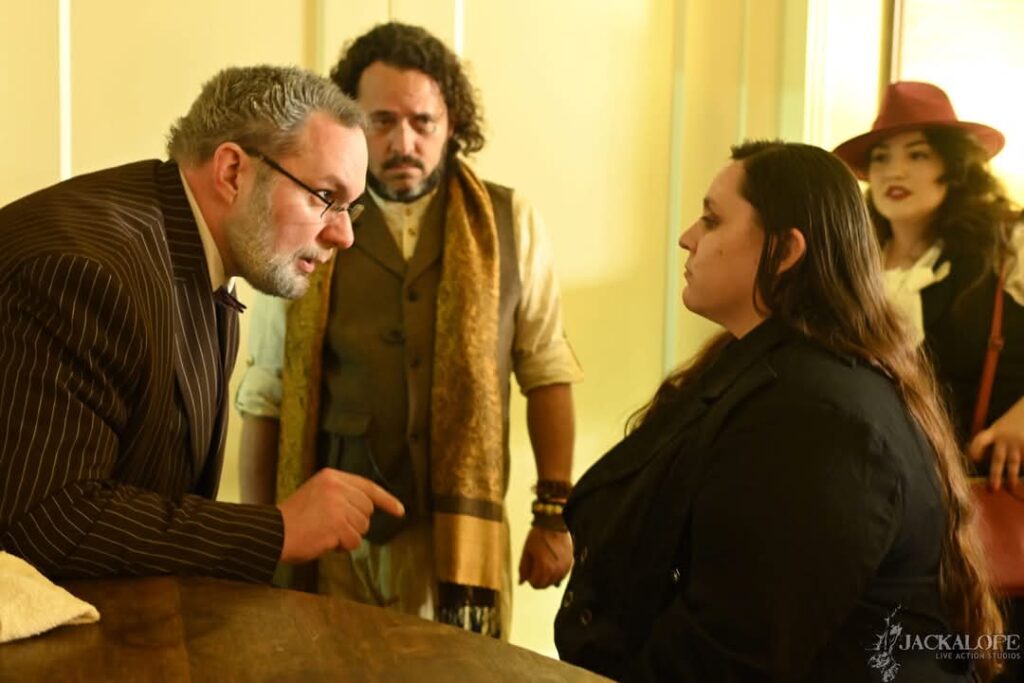
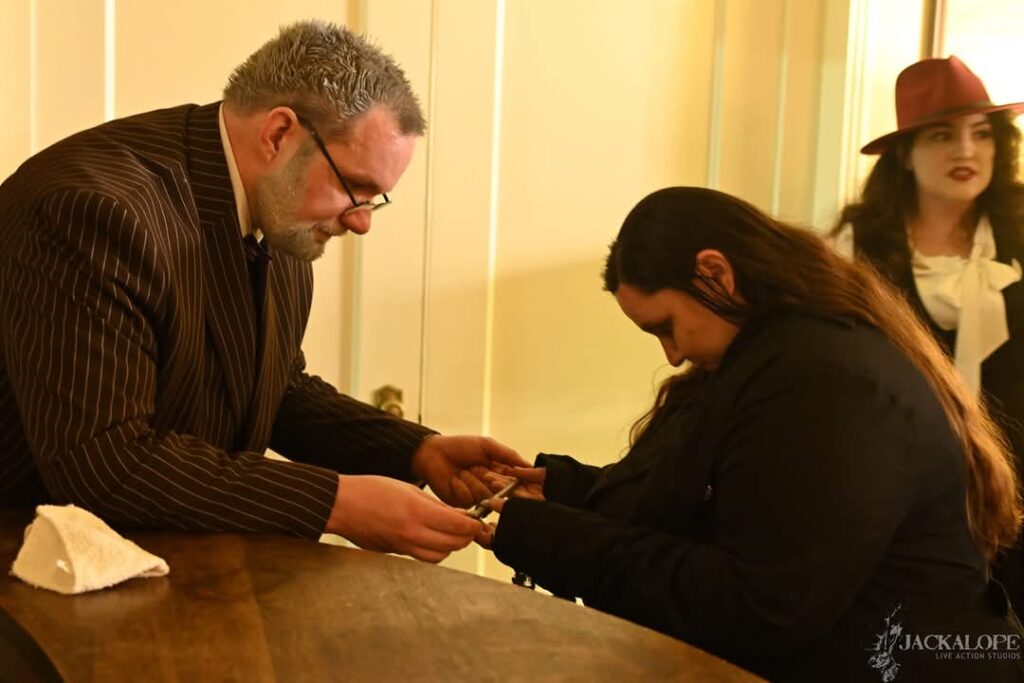
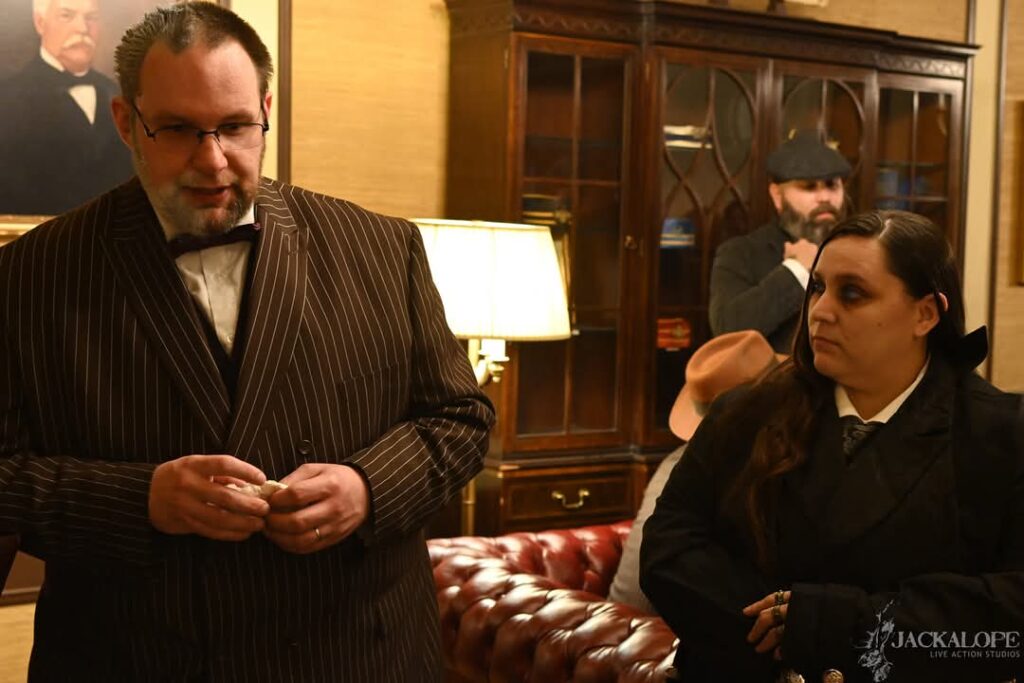
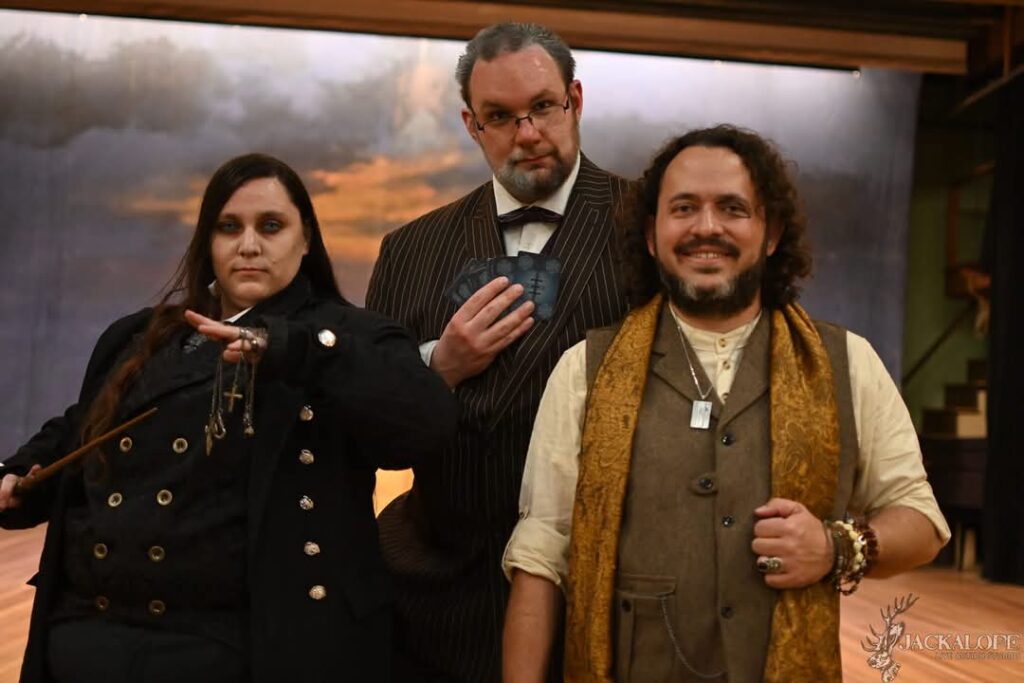
I had the pleasure of meeting Terry Robinson in person and playing his foil at his first-ever LARP.

It wasn’t my first time hearing his name—but it was one of the handful of times in my life that I’ve gotten to not only meet someone whose work I’m a huge fan of but actually play in a game set in the world we both love together.

I remember meeting him and Shea Anderson for lunch ahead of the game. We were all supposed to be tightly connected in character, and we wanted to make Terry’s first LARP experience a good one. I remember how nervous but excited I was on the Uber ride to the cafe because I was going to get to meet someone whose work I’d followed for quite some time at that point.

I remember how sweet and humble he was when I asked if he’d indulge me in a moment of being a fanboy over getting to meet one of the folks behind one of my favorite podcasts.

I remember how kind and caring he was in asking me about how my husband, Adrian, was doing since Mage Noir took place literally days after his liver transplant. I was only there because Adrian had insisted that I go. Terry had paid attention to what was going on in my life, and even though it was his first LARP and he was a bit nervous, he wanted to know what he could do for me to make sure I had a good time.

I remember that Terry asked me if I was a hugger, and when I said yes, he gave me a big hug that made me feel like I’d known him forever.

We had such a wonderful time talking, planning, and connecting on a personal level that I ended up being on crunch time getting into costume and makeup for the LARP. We maintained that friendship afterward, and I always loved seeing his posts and hearing his voice on his podcast, knowing that the man behind it was a sweet, kind, humble, and just…amazing human being.

I don’t fully have words for how much of a shock the news of his passing is. I heard about it last night from Matthew Webb, and I had to lie down because I couldn’t really process it as true at first.

I feel like not only our community but the world in general has lost a little bit more of its light. Terry was a good man who wanted to share his passion and joy with the world, and I think that's important—that being able to share your joy and, in turn, uplift the spirits and voices of others is true magic.

I’ve included some photos from Terry’s first LARP to this email. I hope they can be a little bit of comfort and warmth in this difficult time.

To everyone behind Mage: The Podcast and everyone in Terry’s family, please be gentle to yourselves in the days and weeks to come. Let yourselves process and experience your emotions no matter how up and down they seem. Holding them back or trying to be stoic and composed isn’t the way to process this. It's okay to cry, it’s okay to be angry, and for a bit, it’s okay if just getting out of bed is the greatest challenge you overcome that day.

The community’s love is with you all. Please don’t hesitate to reach out to us for support. We’ll be here.

— Johnathan Fii
Founder and Creative Partner, Cerberus Interactive Media
Community Manager, Jackalope Live Action Studio


The Mage podcast has a special place in my heart, I remember listening to the first episode after searching for Mage-related content on Google podcasts. English is not my first language, and in Brasil, we do not have direct access to MTA media; your podcast made me feel again that purple-deep Magic that I felt when I first read an old Second edition PDF in my high school days. The feeling of “Hey, somebody else also is nerding out about this”. I am forever thankful for this connection. Terry will be deeply missed; my sentiments and condolences to his family and friends.

— Leonardo Rezeda


Hi,

Just wanted to offer my sympathies for the loss of Terry.

I feel getting the illusion that you “know” someone from online content is very common, but Terry’s voice is one that I always look forward to revisiting and I looked forward to each new podcast which featured him. Everything I know of Terry, albeit entirely “second hand”, indicates he was a fantastic person and a very accomplished human being.

I’m grateful for to have had the opportunity to hear his thoughts and listen in on some of his conversations.

I hope this isn’t the end of Mage: The Podcast, as it’s one of my favourites and the quality is so high.

Best wishes for the future,
MJ


I was was so sorry to hear of Terry’s passing. From the things he said in the mage podcast I’m sure he was a great man.

My condolences…

Panos Skordas

Q & A: Techno Mage Settings

Q & A: Techno Mage Settings

We received several questions from a listener regarding Settings in Mage for techno magi. Adam answered the question during the Tomes of Magick: Tradition Book: Akashic Brotherhood episode. We were so delighted with the question that we included it on our blog.

Have a question about Mage? Email us, and we’ll answer you on our blog and our podcast.


I have a majority of the Mage books in my collection, but there is always something that bothered me.

Let’s say you are a Virtual Adept, Society of Ether, or Technocrat with Correspondence 2/3. The rules state you can see far off places. Great. Now, if you are on your own, you could say, “I looked at a CCTV feed I hacked into.” Or a cellphone camera. Great.

But two questions arise.

If another player is looking over your shoulder at your computer, what does she see? Static? Matrix-style code? If you had Forces, you could make your monitor show what you “see” via Correspondence. But if not, it seems a bit tricky.

You observe someone remotely using correspondence 2/3. To you, it is because you hacked into an orbital spy satellite or CCTV, etc. What happens if you later find out that there was no CCTV there? Are you forced into quiet? A Seeking?


Thanks for the interesting question. As with many things in Mage, the Storyteller has a lot of leeway in portraying this.

Question 1: If another player is looking over your shoulder at your computer, what does she see? Static? Matrix-style code? If you had Forces, you could make your monitor show what you “see” via Correspondence. But if not, it seems a bit tricky.

Mage has always allowed a flexible relationship between foci and effects. For example, if a mystic used Correspondence to perceive a distant place, he might close his eyes and see the scene play out as a “vision” in his mind. He could see and hear it, but no one else could. Another mystic might make it appear in a pool of water. Now, someone standing behind the second mystic can watch it too. The first mystic, the one playing visions in his head, can use a Forces effect to create light and sound to play the scene out as a hologram to a group of people standing in the same room. The second mystic asks people to gather around the pool of water and see. Not the same, is it? Different styles and different foci bring different results. The mystic who plays visions in his head has the advantage of privacy. It’s harder for spies to observe the results of his scrying. The mystic with the pool of water has the advantage when he wants to share information with others — but he always wonders if there’s a spirit spying on him quietly.

When Mage was created in 1993, this flexibility in interpreting Sphere effects was supposed to be fun for Storytellers and players. In later years, many people approached Mage with more detailed rules and results in mind.

So, what about technology-using mages? The player and Storyteller need to work out the techno mage’s style. When the mage does this kind of effect, what is the focus? It sounds like the focus is the computer.

However, this is open to interpretation.

Option #1: Did the Virtual Adept create software that resides online and gathers data from multiple sources? Then the result of the Correspondence effect is text on her screen. You see, the limited AI the Adept created collects data from video cameras far away, motion sensors, security guard phone calls, etc. The AI creates a summary in text and sends it to the Adept. The Adept may be paranoid about Technocracy spies. The text sent is encrypted. The Adept is so used to the encryption that a roll isn’t needed. The spy standing behind the Adept sees only gibberish on the screen.

Advantage: the Adept can spy on people where there are no cameras. The AI gathers data from so many sources. Some teenager’s drone may have motion sensors or temperature sensors. The neighbor’s security system (next door to the spying target) may pick up bits of data the AI can interpret.

Disadvantage: Less detailed info in the text summary.

Option #2: The Adept uses Correspondence, but the player tells you they link directly to security cameras far away. If the roll fails, there were no security cameras there (or they weren’t working). Now in this example, if the target the player is trying to spy on is at a place where there aren’t any security cameras, the Storyteller may tell the player, “You don’t even get to roll. Your Correspondence effect just isn’t going to work. Sorry, the NPC’s private home doesn’t have any cameras at all. Your focus limits you in this case.” Anyways, if the Correspondence effect works, the spy behind the Adept watches the video play out on the Adept’s monitor.

Advantage: More detailed info.

Disadvantage: No cameras on the scene, the effect fails.

To summarize, the player and the Storyteller need to work out ahead of time how exactly the character does his Correspondence effects. It should be noted that my examples were quite detailed. If the Storyteller wants to be more informal, say Option #1 and Option #2 have no advantages over each other. They both work equally well. However, Option #1 is text on a monitor. Option #2 is a video that plays on the monitor.

Question 2: You observe someone remotely using correspondence2/3. To you, it is because you hacked into an orbital spy satellite or CCTV, etc. What happens if you later find out that there was no CCTV there? Are you forced into quiet? A seeking?

In both old-school and new-school Mage, players are encouraged to tell the Storyteller what, specifically, the character is doing to make the effect happen. If you want to have a quick, informal approach, the player can say, “Correspondence 2. I rolled three successes. What do I learn?” The Storyteller does more work here. The Storyteller should decide what the player is doing in the game world and what the players sees/hears.

Most Mage players I’ve talked to have some chats where the Storyteller and players work out some details on what their characters usually do to make effects happen. Style, focus, etc. From there, the Storyteller has a sense of how to handle things.

Now, here’s a question to you: Do you want to get into the more profound ideas baked into Mage? Mages use foci to channel their enlightened will. As time goes by, they increase their skill and enlightenment. A day comes when the focus isn’t needed anymore. The mage’s enlightened will is more than computers, software, and CCTV cameras. You could play out a scene in your game where the Adept assumes there are cameras almost everywhere. Just do the effect. It should work. It does. Carry one.

However! Later, the Adept learns a magnetic pulse by Technocrats shut down all cameras — all electronic devices — that day. The Adept’s effect just couldn’t have used any electronic device. So what happened? How did her effect work when it couldn’t have worked? What is going on here? A mystery to unravel. Dig into what lies beneath Mage’s core concepts. It might be fun.

I hope my material is helpful to you.