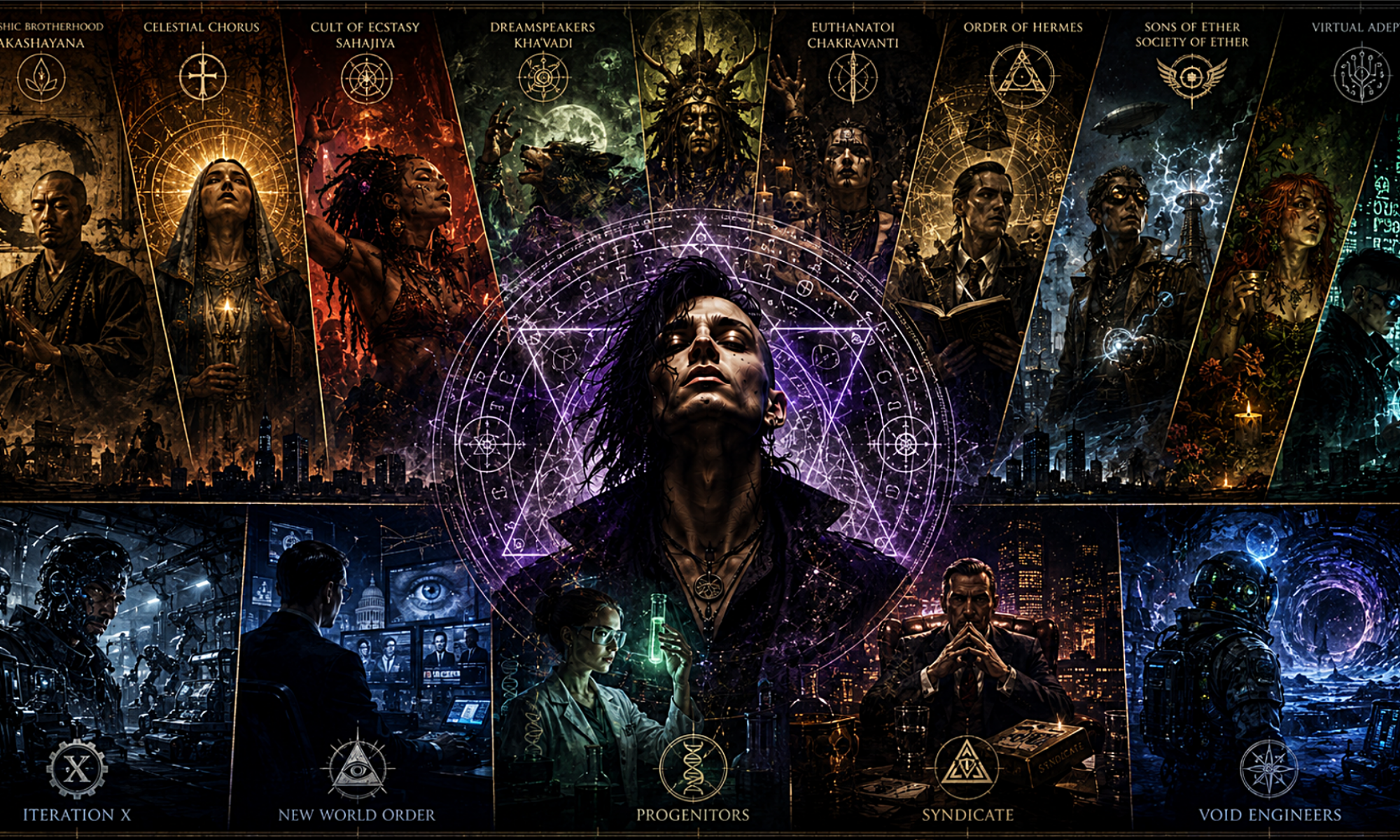

”A Mage chronicle isn’t about saving the world. It's about discovering which world you're actually living in.”
One of the biggest mistakes new Storytellers make is trying to write a Mage-chronicle like it’s a fantasy adventure.
A villain. A quest. Three acts. A final battle.
Mage-can certainly tell stories like that, but the game’s greatest strength lies somewhere else.
Mage-asks questions.
What is reality?
Who decides what’s true?
What would you sacrifice to change the world?
What happens when your deepest beliefs collide with someone else’s?
The best chronicles don’t begin with a plot. They begin with a question.
Start With a Theme, Not a Villain
Before you write your first scene, ask yourself:
What is this chronicle really about?
Not what happens. What it means.
Examples:
- The price of certainty
- Technology replacing faith
- Tradition versus progress
- Identity in the digital age
- The corruption of good intentions
- Memory versus history
- What happens when everyone believes a comforting lie?
Once you know the question, every NPC, faction, and mystery begins orbiting that central idea.
Build a City, Not a Dungeon
Mage-thrives in places that already feel alive.
Your city isn’t just a backdrop.
It's another character.
Ask yourself:
- Who secretly controls this city?
- Where do mages gather?
- Which neighborhoods feel haunted?
- What happened here fifty years ago?
- Where does the Gauntlet feel thin?
- What does the Technocracy own?
- What stories do Sleepers tell themselves that aren't quite true?
When players care about the city, every victory, and every loss, feels personal.
Create Factions With Competing Truths
One of Mage’s greatest strengths is that nearly everyone believes they’re right.
The Traditions aren’t “good.” The Technocracy isn’t “evil. The Nephandi don’t think they’re monsters.
Build every faction around a worldview rather than an alignment.
Ask:
- What do they believe?
- Why are they convinced they're saving the world?
- What would make them compromise?
- What line will they never cross?
Conflict becomes far more interesting when everyone has a point.
Think in Mysteries, Not Encounters
Players rarely remember combat. They remember revelations.
Instead of asking:
"What fight happens next?"
Ask:
"What truth do they discover next?"
Perhaps the local chantry is secretly funded by Pentex. Maybe their mentor isn’t Awakened at all. Possibly the Marauder they’ve been hunting is the only person telling the truth.
Mage is at its best when every answer creates two new questions.
Let the Cabal Drive the Story
Don’t write a story for your players. Write a world that reacts to them.
Every character should arrive with:
- A belief worth challenging
- Someone they trust
- Someone they fear
- Someone who wants something from them
- A personal mystery
- A reason to Awaken
When players make meaningful choices, your chronicle becomes theirs, not yours.
Embrace Consequences
Reality pushes back. Not just through Paradox. Every magical decision changes relationships.
Political alliances. The Consensus. The Umbra.
Even small victories should leave ripples behind.
The world should remember what the cabal has done.
Use Atmosphere as a Storytelling Tool
Chronicle planning isn’t only maps and NPCs. It’s mood.
What does your city sound like? What colors define it? What music plays during quiet conversations? What smells linger inside abandoned chantries?
When your players remember a chronicle years later, they’ll remember how it felt-more than how many successes they rolled.
Build Layers
The best Mage chronicles reward curiosity. Create mysteries inside mysteries.
The abandoned church isn’t just haunted. It’s built over a forgotten Node. The Node isn’t just powerful. It’s connected to an impossible place in the Umbra. That place isn’t just dangerous. Someone has been hiding there for decades.
Every discovery should make the world feel larger.
Recommended Mage: The Podcast Episodes
Looking for inspiration? These episodes pair especially well with chronicle planning:
What Is Mage: The Ascension?
If you’re introducing new players or rediscovering the game yourself, this is the best place to start. It lays the philosophical foundation for everything that follows.
Guide to the Traditions
A deep dive into the Traditions and the competing worldviews that shape Mage. Essential listening when designing factions, mentors, and political conflicts.
Technocracy Reloaded
Want to create memorable antagonists? This discussion explores the modern Technocracy and why its members often believe they’re the heroes of the story.
One-Dot Sphere Effects
Perfect for Storytellers who want to encourage creative magic instead of treating Spheres like a spell list.
The Perils of Paradox
Paradox isn’t just punishment. It’s one of the game’s most powerful storytelling tools. This episode explores how reality itself responds when mages push too far.
Top 5 Books to Run a Mage Chronicle
Our recommendations for the supplements that will give your chronicles more depth, better antagonists, stronger themes, and richer stories.
Read Widely
Some of the best Mage inspiration isn’t found in Mage books.
Read philosophy. Study comparative religion. Browse conspiracy history. Visit art museums. Read cyberpunk. Walk unfamiliar neighborhoods. Listen to strange music. Collect blog posts. Follow threads that don't seem connected.
Mage rewards curiosity. So should its Storytellers.
The World Is Already Strange
The best Mage chronicles don’t ask players to imagine an impossible world.
They ask them to look at the real one a little differently.
Once your players start questioning what’s behind the next door, beneath the next city block, or hidden inside the next news story…
…you’ve succeeded.
Continue Your Journey
Looking for more tools?
-Read our Storytelling Tools-guide.
-Explore our Music & Atmosphere-recommendations.
-Browse our Plot Hooks-collection.
-Join our Discord and swap chronicle ideas with Storytellers from around the world.
Reality is negotiable.
Your chronicle should be too.
Discover more from Mage: The Podcast
Subscribe to get the latest posts sent to your email.