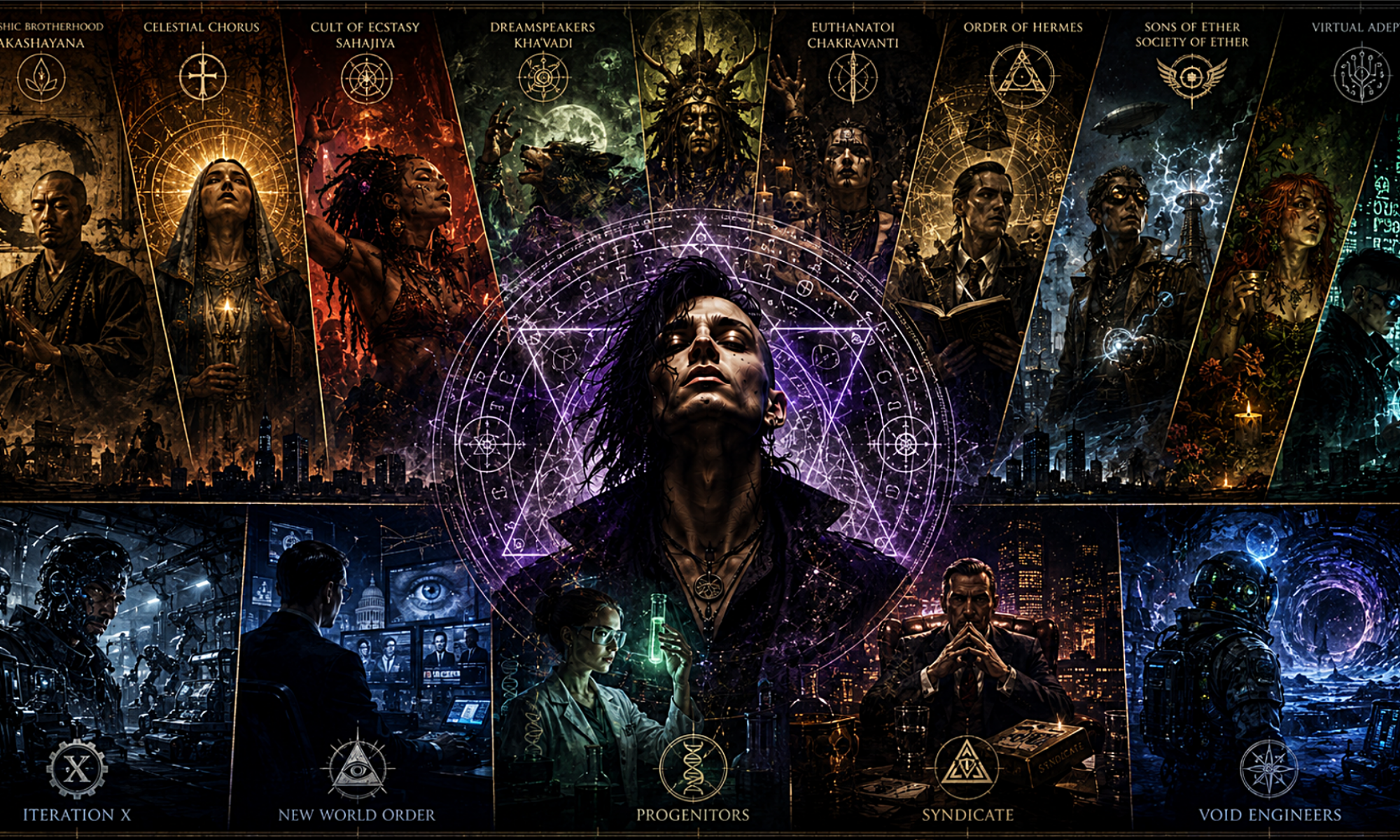

Mage: The Ascension is not a game that rewards overplanning. It rewards preparation. That difference matters.
Overplanning says, “Here is the story my players will follow.”
Preparation says, “Here is a living world full of beliefs, factions, mysteries, consequences, and dangerous choices. Let’s see what happens when the cabal touches it.”
That is where Storytelling Tools come in. Not tools that make Mage smaller. Tools that make Mage playable.
Why Mage Needs Storytelling Tools
Mage is rich, strange, philosophical, contradictory, and occasionally overwhelming. That is part of its charm. It is also why a Storyteller can sit down with the core book, stare at hundreds of pages of brilliant material, and wonder: “Okay. But what do I actually run on Friday?”
Storytelling Tools help bridge the gap between big ideas and table play.
They turn themes into sessions. They turn factions into conflicts. They turn character beliefs into drama. They turn “reality is negotiable” into something your players can actually experience.
1. Session Zero Worksheet
Every Mage chronicle should begin with a conversation.
Before anyone chooses Spheres, before anyone builds a cabal, before anyone starts arguing about whether a smartphone counts as a Focus, the group needs to answer one question: What kind of Mage game are we playing?
A Session Zero worksheet can help establish:
- Chronicle tone
- Street-level or cosmic scale
- Traditions, Technocracy, Orphans, or mixed cabal
- Level of horror
- Expected weirdness
- Use of Paradox
- Safety tools and boundaries
- Player goals
- Character connections
- How much rules precision the table wants
Mage can be occult horror, philosophical conspiracy, urban fantasy, political thriller, cosmic weirdness, or personal awakening.
Your table needs to know which door it is opening.
- Related Mage: The Podcast episode:
What Is Mage: The Ascension?
2. Chronicle Planning Sheet
A good Mage chronicle does not start with a villain. It starts with a question.
Try building your chronicle around one of these:
- Who controls reality in this city?
- What lie keeps the peace?
- What truth would destroy the cabal?
- What does the Technocracy protect that the Traditions refuse to understand?
- What price does Awakening demand?
- What happens when a player’s Paradigm is wrong, incomplete, or dangerous?
A Chronicle Planning Sheet should include:
- Central theme
- Primary city or setting
- Main factions
- Major mysteries
- Key NPCs
- Nodes, chantries, constructs, and sacred spaces
- Recurring symbols
- Tone references
- Opening situation
- Escalation path
- Possible consequences
Do not write the ending. Write pressure. Then let the players create the explosion.
- Related Mage: The Podcast episode:
Top 5 Books to Run A Mage: The Ascension Chronicle
3. Character Belief Questionnaire
Mage characters are not just people with powers. They are people with a theory of reality. That theory should matter.
A Character Belief Questionnaire can ask:
- What does your character believe is fundamentally true?
- What do they think most Sleepers misunderstand?
- What did Awakening cost them?
- Who taught them how the world works?
- What would make them doubt their Paradigm?
- What kind of magic feels natural to them?
- What kind of magic feels offensive, false, or dangerous?
- Who do they trust?
- Who do they owe?
- What do they want badly enough to risk Paradox?
This tool helps players build mages who are more than Sphere combinations.
It gives the Storyteller levers to pull.
- Related Mage: The Podcast episode:
One Dot Sphere Effects
4. Paradigm and Focus Worksheet
Paradigm is one of the best parts of Mage. It is also one of the easiest parts to flatten.
A good worksheet helps players move from vague concepts like “chaos magician” or “techno-wizard” into specific practices.
Ask:
- What does your character believe magic is?
- Where does power come from?
- Why does their magic work?
- What tools, rituals, technologies, prayers, movements, or symbols do they use?
- What would make their magic fail?
- What does vulgar magic look like for them?
- What does coincidental magic look like?
- How do they explain Paradox?
Once a player can answer those questions, magic becomes personal.
Not just “I roll Forces.”
But “I reroute the city’s electrical grid through a stolen saint’s relic and a broken pager because all systems are prayers if enough people depend on them.”
That is Mage.
5. Relationship Map
Mage chronicles become easier to run when you can see who wants what.
A relationship map tracks:
- Player cabal members
- Mentors
- Rivals
- Chantry leadership
- Technocracy agents
- Sleepers
- Cults
- Spirits
- Nephandi
- Marauders
- Vampires, werewolves, ghosts, or other crossover forces
- Debts, secrets, alliances, betrayals, and favors
This is especially useful because Mage is rarely just about combat.
It is about pressure.
Who is watching the cabal? Who is using them? Who wants them protected? Who wants them erased? Who thinks they are useful but expendable?
A relationship map turns your chronicle into a web. Tug one strand and the whole city moves.
- Related Mage: The Podcast episode:- –
Tomes of Magick: Book of Mirrors: Mage Storytellers Handbook
6. Faction Agenda Sheet
Every major faction should have three things:
- A belief
- A goal
- A line they will not cross
The Traditions, Technocracy, Crafts, Nephandi, Marauders, and local factions all become more useful when they are treated as living organizations instead of lore entries.
For each faction, write:
- What do they believe?
- What do they want in this city?
- What resources do they control?
- What are they afraid of?
- What are they hiding?
- What would make them cooperate with the cabal?
- What would make them betray the cabal?
- What do they misunderstand?
The strongest Mage antagonists usually believe they are saving the world. That is what makes them dangerous.
- Related Mage: The Podcast episodes:
Tomes of Magick: Technocracy Reloaded
Technocratic Leadership: Who’s In Control?
Are Technocrats the Heroes?
7. Paradox Consequence Table
Paradox should not feel like a parking ticket from reality. It should feel like reality noticing.
A Paradox Consequence Table can help you improvise effects that fit the tone of your chronicle.
Consequences might include:
- Strange coincidences
- Dreams that bleed into waking life
- Temporary sensory distortions
- Bad luck
- Spirit attention
- Technocratic detection
- Witnesses remembering things differently
- Reality scars
- Symbolic backlash
- Paradox spirits
- Removal into a Paradox Realm
The goal is not to punish creativity. The goal is to remind players that magic has weight.
- Related Mage: The Podcast episode:
The Perils of Paradox
8. Scene Framing Checklist
Mage sessions can sprawl. That is not always bad, but a checklist helps every scene carry weight.
Before a scene starts, ask:
- What is the purpose of this scene?
- What does the cabal want?
- What does someone else want?
- What new information can be discovered?
- What choice can be made?
- What might change afterward?
- What sensory detail makes this feel like Mage?
That last one matters.
A flickering fluorescent light. A saint card tucked into a server rack. A homeless prophet reciting stock prices. A rainstorm that only falls on one building. A mirror that reflects the room from yesterday.
Mage lives in details like that.
9. Mystery Tracker
Mage loves secrets. But secrets need structure.
Use a Mystery Tracker to organize:
- Core mystery
- Surface clues
- Hidden clues
- False leads
- NPCs who know partial truths
- What the Technocracy thinks is happening
- What the Traditions think is happening
- What is actually happening
- What happens if the cabal does nothing
The best Mage mysteries are not puzzles with one correct answer.
They are realities under negotiation.
10. Atmosphere Board
Your chronicle should have a mood.
Build a simple atmosphere board with:
- Images
- Music
- Films
- Colors
- Locations
- Symbols
- Quotes
- Fashion
- Architecture
- Album covers
- News clippings
- Conspiracy diagrams
- Occult art
- Technology references
This gives everyone a shared visual and emotional language.
A Virtual Adept chronicle should not feel like a Verbena chronicle. A Chicago street-level mystery should not feel like an Umbrood pilgrimage.
Your atmosphere board helps the table enter the same world.
11. NPC Card Template
Mage NPCs should be easy to run.
For each important NPC, write:
- Name
- Faction
- Role
- Public face
- Private agenda
- Magical style
- What they want from the cabal
- What they can offer
- What they are hiding
- One memorable detail
Do not overstat them. Make them playable. One great detail is better than three pages of biography.
12. After-Session Debrief
After every session, write down:
- What changed?
- What did the players care about?
- Which NPCs landed?
- What questions did they ask?
- What consequences are now in motion?
- What did they misunderstand in an interesting way?
- What should return later?
This is how you make the chronicle feel responsive.
Mage works best when players sense the world reacting to them.
Not because the Storyteller planned everything. Because the Storyteller was listening.
The Tool Is Not the Game
None of these tools are required.
You can run Mage with a book, some dice, and a group of people willing to chase impossible ideas.
But tools help.
They reduce friction. They organize complexity. They make it easier to preserve what makes Mage beautiful without getting lost in the machinery.
Use what helps. Ignore what does not. Hack the rest.
That is also Mage.
Keep Building the Toolkit
If you want to keep going, start with these Mage: The Podcast resources:
- Podcast Archive
- Top 5 Books to Run A Mage: The Ascension Chronicle
- The Perils of Paradox
- One Dot Sphere Effects
- Tomes of Magick: Book of Mirrors: Mage Storytellers Handbook
- Tomes of Magick: Technocracy Reloaded
Mage is a game about changing reality.
The right tools help you make that reality easier to enter, stranger to explore, and harder to forget.
Contact us at magethepodcast@gmail.com with feedback and comments, and please help extend the reach of the show by sharing it with friends.
Follow Us
Listen on Apple Podcasts, Spotify, YouTube, or your favorite podcast app.
Join our Discord server.
Discover more from Mage: The Podcast
Subscribe to get the latest posts sent to your email.