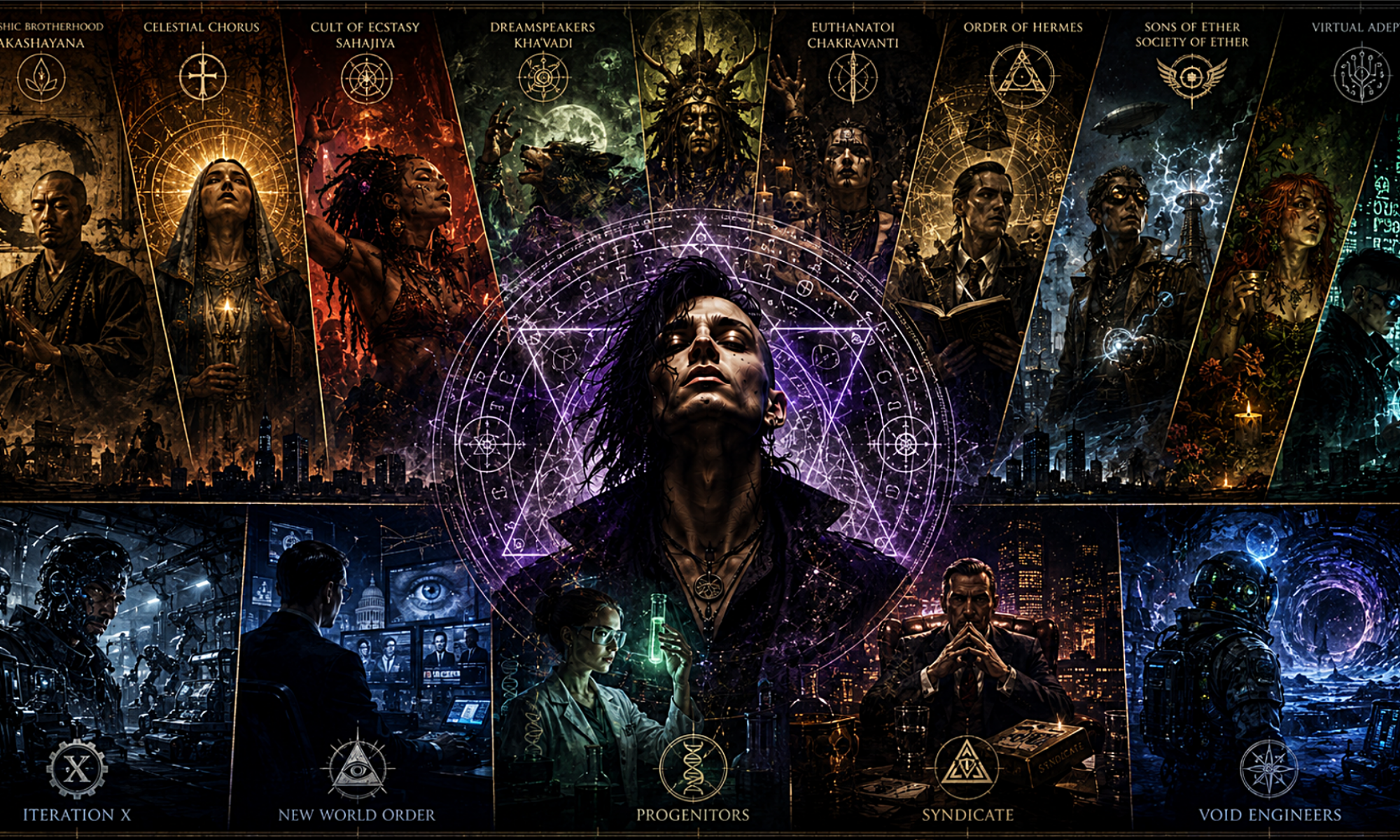
Mage is full of factions, mentors, rivals, cabals, chantries, constructs, cults, spirits, informants, enemies, and people who know too much.
A relationship map can save your chronicle.
Not because Mage needs more paperwork. Because Mage is a game about pressure.
- Who owes whom?
- Who taught whom?
- Who betrayed whom?
- Who knows the truth?
- Who thinks they know the truth?
- Who wants the cabal alive, useful, compromised, recruited, silenced, or erased?
That is where the story lives.
What Is a Relationship Map?
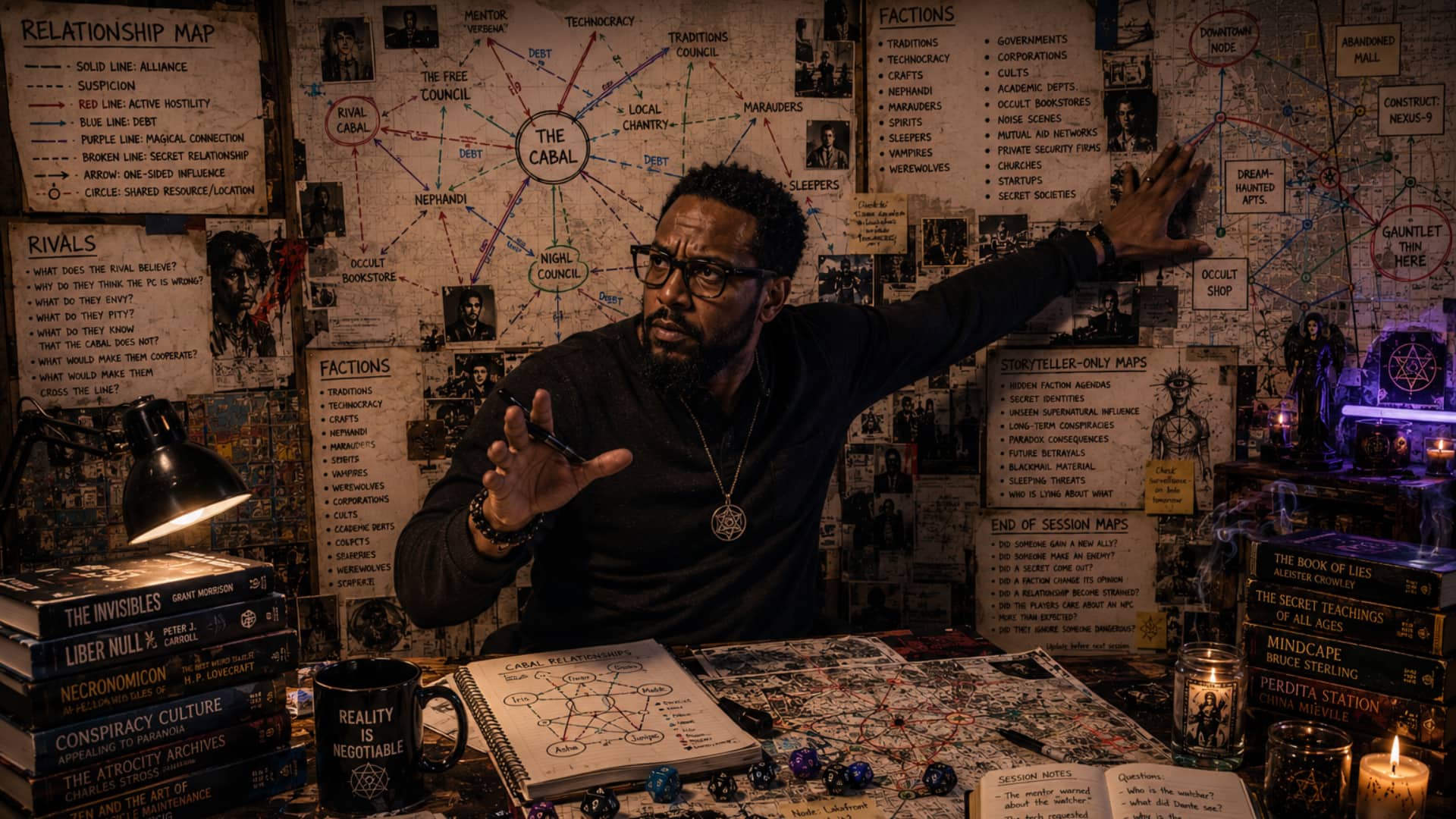
A relationship map is a visual tool that shows how characters, factions, locations, secrets, and conflicts connect.
It can be simple.
A circle for the cabal. A few names around it. Lines showing alliances, grudges, debts, secrets, and threats.
That’s enough.
The goal is not to create beautiful graphic design. The goal is to make the invisible structure of the chronicle visible. In Mage, that structure matters. Because the cabal is rarely dealing with one problem.
They are dealing with a web.
Why Relationship Maps Work So Well for Mage
Mage is not only about what characters can do. It is about what they believe. That means every relationship has ideological weight.
A mentor is not just a teacher. They are a worldview with a face.
A rival is not just an obstacle. They are proof that another kind of magic works.
A Technocrat is not just an antagonist. They may be someone who genuinely believes the cabal is dangerous.
A cult is not just a plot hook. It may be a failed attempt at Awakening.
A chantry is not just a clubhouse. It is politics, history, grudges, resources, secrets, and shared danger.
A relationship map helps you keep all of that alive.
Start With the Cabal
Put the player characters at the center.
Then ask:
- Who trusts whom?
- Who disagrees about magic?
- Who has history?
- Who shares a mentor?
- Who owes someone an apology?
- Who saw something together they cannot explain?
- Who is hiding something?
- Who would risk Paradox for another character?
- Who would not?
The cabal does not need to be harmonious.
In Mage, disagreement can be fuel. But the Storyteller should understand the emotional architecture of the group.
Add Mentors
Every Mage mentor is a gift to the Storyteller. A mentor can provide guidance, resources, misinformation, pressure, guilt, affection, manipulation, or unfinished business.
For each mentor, write:
- What did they teach?
- What did they leave out?
- What do they want from the student?
- What do they fear the student will become?
- What faction do they serve?
- What secret are they hiding?
- What mistake did they make years ago that is now returning?
A good mentor should be helpful. A great mentor should be complicated.
Add Rivals
Rivals are better than enemies. Enemies want the cabal gone. Rivals want to prove something. A rival can challenge a character’s beliefs, methods, status, ethics, or magical style.
Ask:
- What does the rival believe?
- Why do they think the player character is wrong?
- What do they envy?
- What do they pity?
- What do they know that the cabal does not?
- What would make them cooperate?
- What would make them cross the line?
Mage thrives when conflict is philosophical as well as practical.
Add Factions
Now place the larger forces around the cabal.
- Traditions
- Technocracy
- Crafts
- Nephandi
- Marauders
- Spirits
- Sleepers
- Vampires
- Werewolves
- Governments
- Corporations
- Cults
- Academic departments
- Occult bookstores
- Noise scenes
- Mutual aid networks
- Private security firms
- Churches
- Startups
- Secret societies.
Each faction needs only three things:
- What they believe.
- What they want.
- What they will do if ignored.
That last one is important. The world should move even when the cabal does nothing.
Use Different Line Types
Make the map easy to read.
Use different kinds of lines:
- Solid line: alliance
- Dotted line: suspicion
- Red line: active hostility
- Blue line: debt
- Purple line: magical connection
- Broken line: secret relationship
- Arrow: one-sided influence
- Circle: shared resource or location
You do not need fancy software. Notebook paper works. Index cards work. A whiteboard works. A corkboard with string works if you want to fully embrace the conspiracy-wall aesthetic.
Map Secrets Separately
Some relationships should be visible to players. Others should remain Storyteller-only.
For example:
Visible:
- The cabal knows their mentor dislikes the local Hermetic chantry.
- The Technocracy is monitoring a downtown Node.
- A local cult is recruiting Sleepers.
Hidden:
- The mentor used to be part of that chantry.
- The Technocracy is protecting the Node from something worse.
- The cult’s leader is receiving dreams from a Marauder.
A good relationship map lets you track both the surface story and the hidden machinery underneath it.
Include Locations
In Mage, places matter.
Add important locations to your map:
- Chantries
- Constructs
- Nodes
- Libraries
- Clubs
- Churches
- Hospitals
- Universities
- Corporate offices
- Abandoned malls
- Subway stations
- Occult shops
- Server farms
- Dream-haunted apartments
- Places where the Gauntlet feels thin
Then connect people to places.
- Who controls the Node?
- Who meets at the club?
- Who died in the church basement?
- Who owns the building through three shell companies?
- Who refuses to go near the train station after midnight?
Locations become story engines when people want them, fear them, or lie about them.
Track Pressure, Not Just Information
A relationship map is not only a reference tool. It is a pressure machine.
Every few sessions, look at the map and ask:
- Who has been ignored?
- Who is getting nervous?
- Who sees an opportunity?
- Who feels betrayed?
- Who wants repayment?
- Who would make the next move?
- Who has misunderstood the cabal’s actions?
- Who benefits from escalating the conflict?
This keeps the chronicle alive. Instead of inventing random events, you let the map tell you what happens next.
Example: A Simple Mage Relationship Map
Start with:
The Cabal
Connected to:
Mentor A
Helpful, but hiding a past deal with the Technocracy.
Local Chantry Council
Wants the cabal useful, obedient, and out of trouble.
Technocracy Field Agent
Believes the cabal is reckless but not yet disposable.
Occult Bookstore Owner
Sleeper ally who knows more than they should.
Cult Leader
Recruiting people near a weak Node.
Marauder
Appears in dreams and may be warning the cabal.
Old Rival Cabal
Competing for status, resources, and moral superiority.
Now add lines:
- Mentor A owes the Technocracy Field Agent.
- The Cult Leader is unknowingly influenced by the Marauder.
- The Bookstore Owner used to date someone on the Chantry Council.
- The Rival Cabal wants the same Node.
- The Technocracy Agent is protecting the Node from an entity in the Umbra.
That is already enough for months of play.
Player-Facing Maps
Consider letting players build part of the relationship map.
Ask them to add:
- One ally
- One rival
- One person they owe
- One person who owes them
- One place that matters to them
- One unresolved relationship
- One secret connection
This gives players ownership of the chronicle. It also gives the Storyteller ready-made hooks.
When a player creates an NPC, they are telling you, “This person matters to me.”
Believe them. Use that.
Storyteller-Only Maps
Your private map can include deeper layers:
- Hidden faction agendas
- Secret identities
- Unseen supernatural influence
- Long-term conspiracies
- Paradox consequences
- Future betrayals
- Blackmail material
- Sleeping threats
- Who is lying about what
Do not overcomplicate it. A map should make the game easier to run, not harder. If the map becomes a burden, simplify it.
Update the Map After Each Session
After every session, spend five minutes updating the map.
Ask:
- Did someone gain a new ally?
- Did someone make an enemy?
- Did a secret come out?
- Did a faction change its opinion of the cabal?
- Did a relationship become strained?
- Did the players care about an NPC more than expected?
- Did they ignore someone dangerous?
Mage chronicles become stronger when the world remembers.
Relationship Maps Make Consequences Visible
The most satisfying moments in Mage often come from consequences. Not punishment. Consequences.
- The cabal saves a spirit and angers a chantry.
- They expose a Technocratic operation and create a power vacuum.
- They help a cult member Awaken and accidentally create a rival.
- They humiliate an enemy who later returns with better information.
- They protect a Node and become responsible for it.
A relationship map helps you track the ripples. The players do something. The web moves. Reality responds.
Recommended Mage: The Podcast Episodes and Resources
These episodes pair well with relationship-map planning:
- Tomes of Magick: Book of Mirrors: Mage Storytellers Handbook
- Top 5 Books to Run A Mage: The Ascension Chronicle
- Tomes of Magick: Guide to the Traditions
- Tomes of Magick: Technocracy Reloaded
- Are Technocrats the Heroes?
- The Perils of Paradox
- Plot Hooks
The Map Is Not the Territory
A relationship map is not the chronicle. It is a tool. Use it until it helps. Change it when the players surprise you. Ignore it when the table finds something better.
Mage is a game about changing reality. Your notes should be allowed to change too. But when the cabal is surrounded by factions, mentors, rivals, chantries, constructs, cults, spirits, and people who know too much, a relationship map gives you one precious advantage:
You can see the web before it catches fire.
Contact us at magethepodcast@gmail.com with feedback and comments, and please help extend the reach of the show by sharing it with friends.
Follow Us
Listen on Apple Podcasts, Spotify, YouTube, or your favorite podcast app.
Join our Discord server.
Discover more from Mage: The Podcast
Subscribe to get the latest posts sent to your email.