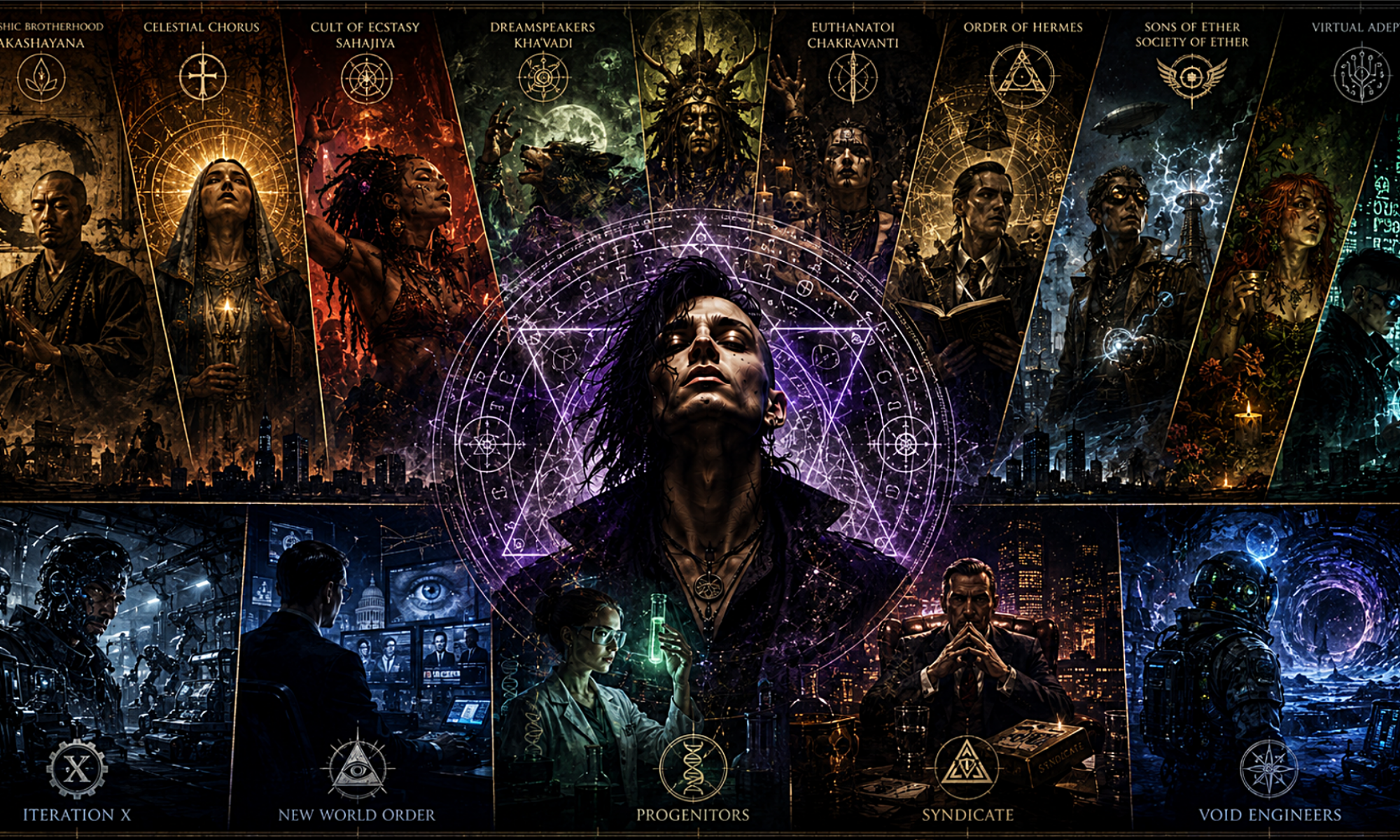
When I started Mage: The Podcast back in 2018, I was nervous.
Not butterflies nervous. More like, okay, you know when you’ve committed to something out loud before you’ve fully thought it through and then you just have to live in that for a while? That kind.
Which, I’ve since decided, is probably the correct amount of nervous for anything involving Mage: The Ascension.
I’d only just found the game. I’d been poking around for podcasts the way you do, found stuff for Vampire, for Werewolf, even one for Changeling (which, sidebar, still criminally underrated, we’ll get there someday) but nothing really dedicated to Mage. I wanted to understand it. I wanted someone to just talk to me about it.
So I figured, well. If nobody’s doing it, I guess that’s me now.
I want to be clear that I was not the wise old guy with the sourcebooks. I was the guy at the table with too many questions and a soda he’d forgotten about. You know that feeling when someone starts explaining a game and something just clicks open in your brain? Not because they have The Official Answer, but because they have a way in? That’s what I was hoping to find. That’s what I wanted the show to be.
For the first episode I sat down with Satyros Phil Brucato, one of the main creative forces behind Mage. I asked him the dumb obvious question. What is this game, actually?
He said: Mage is a game about reality on the brink.
I’ve been chewing on that ever since. Because it was true in the ‘90s when the game came out. It was true in 2018 when we talked. And honestly, in 2026 it might be the most true it’s ever been, which is either exciting or alarming depending on the day.
Let me explain.
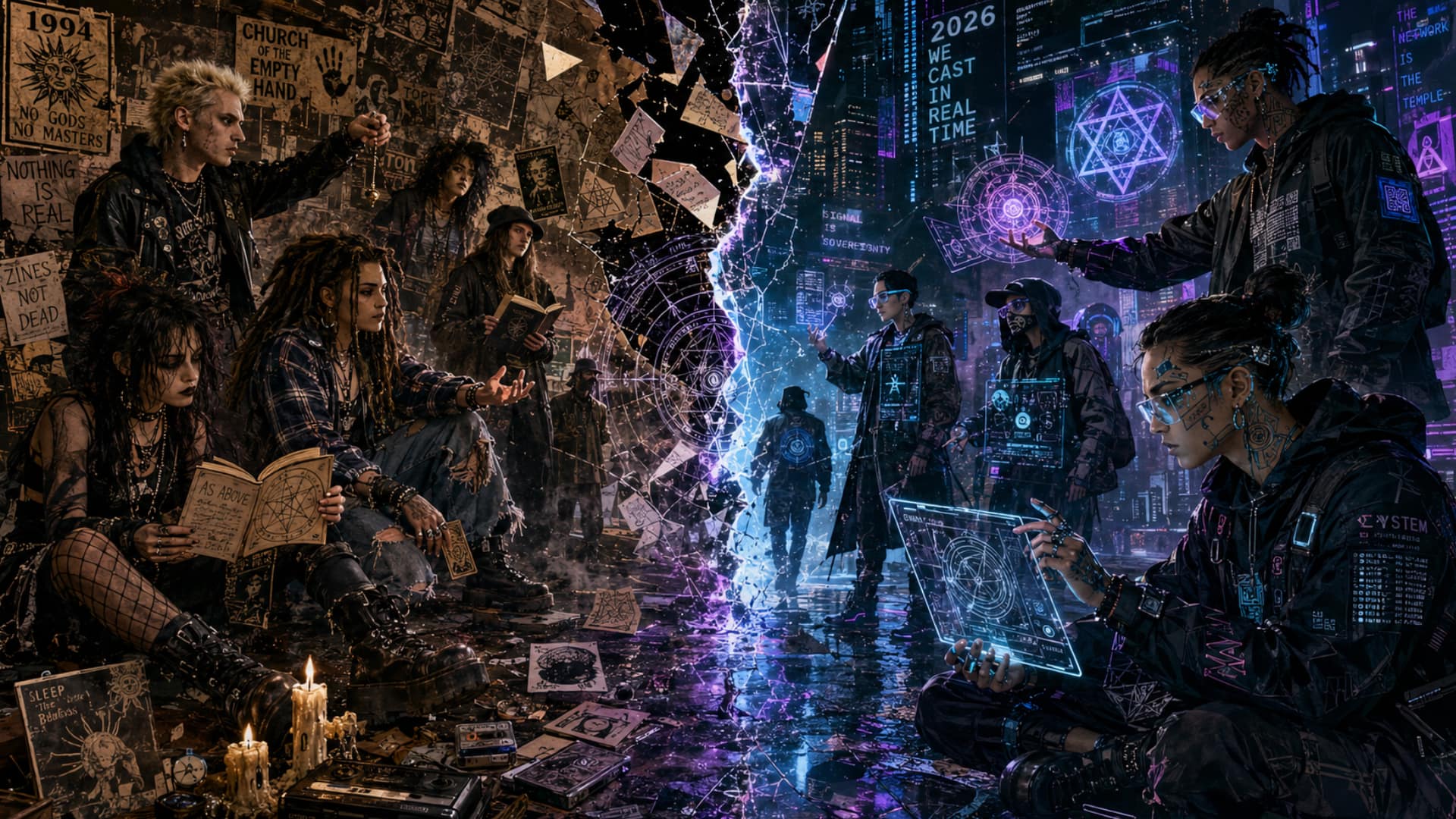
The original game grew out of this incredible weird moment — occult bookstores, goth clubs, zines, cyberpunk, a very specific ‘90s flavor of paranoia and possibility, that feeling like the world was maybe about to wake up or maybe about to eat itself. Mage took all of that and asked: what if your beliefs aren’t just your own private business? What if they push back on the world? What if reality is something people are actually fighting over, all the time, and most of us just can’t see it?
By 2018 that question had gotten a lot less abstract. Nobody needed to explain anymore why two people could look at the same event and come away with completely different versions of what happened. That was just Tuesday. Mage stopped feeling like a ‘90s artifact and started feeling like somebody had snuck a warning label onto the decade.
Now it's 2026 and look, I’m not trying to be gloomy here, but the situation has gotten genuinely strange. We’re not just fighting about what’s true. We’re fighting about what was made by a person, what was generated, what was edited, what some algorithm fed you because it figured you’d stay on the app another thirty seconds. I don’t think Mage fully saw that coming. Honestly that just makes it more interesting to me. The game keeps finding new ways to be relevant without trying.
One thing that stuck with me from that first interview — Satyros wasn’t precious about the old stuff. He said yeah, the ‘90s books were great (they really were), and they were very much products of the ‘90s. Some things were ahead of their time. Some cultural portrayals were made with good intentions and not enough understanding. He was just honest about it. And I appreciated that, because a game fundamentally about belief and power and who gets to define reality cannot be the kind of thing that sits in amber and says nope, we got it right, no notes.
The world moves. The game has to move. Otherwise what are we even doing.
Roleplaying in general has changed in ways nobody really mapped out ahead of time. Your game used to live at your table. Maybe a con. Now it lives on Twitch, on Discord (oh, and join our community on Discord), on a crowdfunding page, in a three-hour actual play video that somehow has a million views. A house rule can become a whole discourse before you’ve had your second coffee. It’s a lot.
Very Mage, honestly.
The thing I keep coming back to is the concept of focus in Mage 20. Paradigm, practice, instruments. Your mage has a specific belief about how reality works, acts on it in a specific way, and uses tools that fit their worldview. Not generic spell slots. Your prayer. Your code. Your tarot deck, your lab equipment, your old family story, the cigarette you light before things get bad, the conspiracy board in your kitchen that your roommate keeps asking about.
All of that is character. All of that is identity. All of that is yours.
That’s where Mage still gets me. It makes power personal. It doesn’t just ask what you can do. It asks why you think you’re the one who gets to do it. That’s a harder question. A better one.
Going back to that first episode now, I expected it to feel dated. I thought I’d cringe a little, you know how it is. Instead it just felt like opening a box and finding out whatever’s inside never actually stopped running.
What is real? Who gets to say? What do you believe, and what does believing it cost you?
You might think those were Mage questions.
Turns out they’re just questions. The game got there first, is all.
Contact us at magethepodcast@gmail.com with feedback and comments, and please help extend the reach of the show by sharing it with friends.
Follow Us
Listen on Apple Podcasts, Spotify, YouTube, or your favorite podcast app.
Join our Discord server.
Discover more from Mage: The Podcast
Subscribe to get the latest posts sent to your email.